How we picked
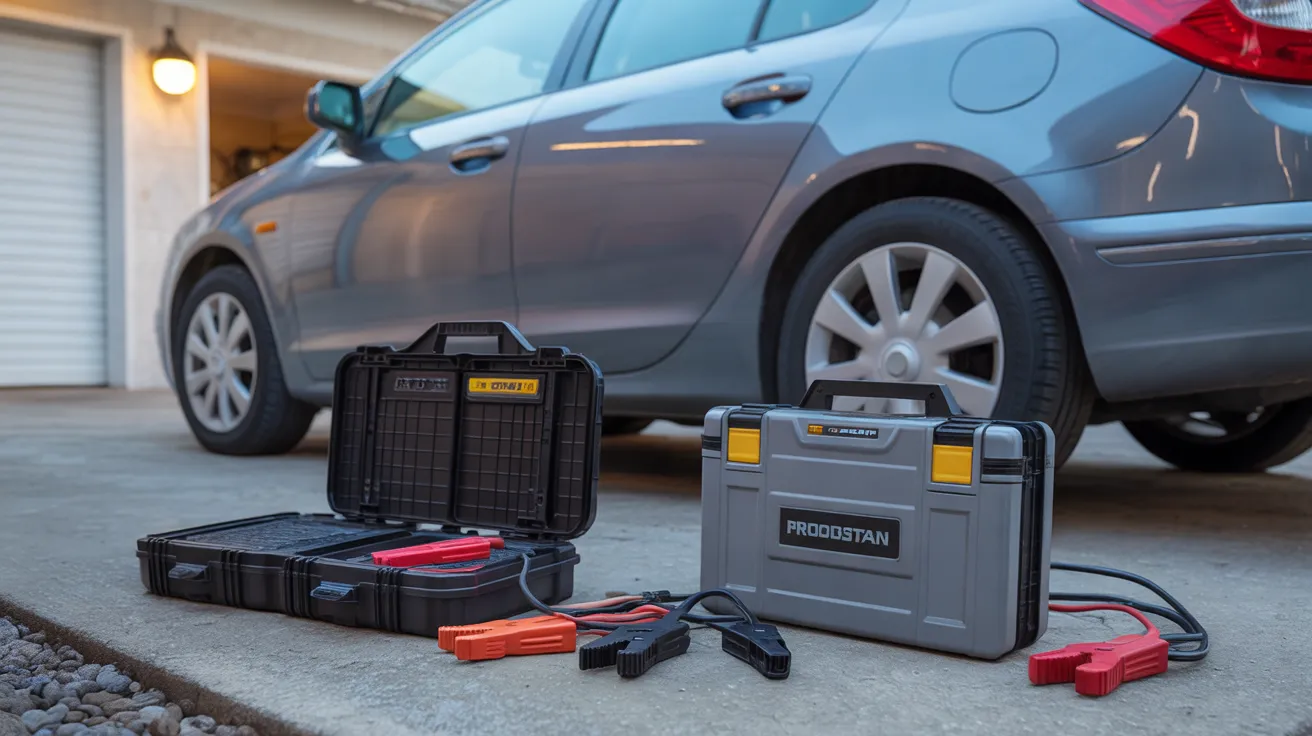
We looked at portable jump starters you can buy and compared listed peak amps, battery capacity, supported engine sizes, clamp safety protections, weight, and dimensions. We also checked practical details a reader can verify on product pages, such as USB charging ports, built-in lights, carrying cases, and warranty length.
Tip: Match the jump starter’s rated output to your engine type and size, and check that it supports your battery voltage before you buy.
A portable jump starter earns its keep the first time your battery dies in a grocery-store parking lot at 9 p.m. Modern packs that fit in a glove box can deliver 1,000A to 6,000A peak current, and the best ones in 7 Best Portable Jump Starters in 2026 now add extras like air compressors, USB-C PD charging, and reverse-polarity protection that makes a bad clamp connection far less likely to ruin your day.
That’s why this guide focuses on the part most ranked lists skip: which type of jump starter actually fits your vehicle, climate, and usage pattern. If you’re comparing a compact portable jump starter for cars with a larger all-in-one unit, or wondering whether a portable lithium ion jump starter is really worth the step up, you’ll get a clearer answer here.
Quick trust note: The ranked products and formal “how we picked” section already appear above on this page. Below, I’m focusing on real-world fit, tradeoffs, battery type, seasonal performance, and the mistakes buyers make after the sale.
Which portable jump starter is best for your vehicle size?
The biggest buying mistake with the 7 Best Portable Jump Starters in 2026 isn’t choosing a “bad” unit. It’s buying a pack sized for a compact gas sedan, then expecting it to reliably crank a cold-soaked SUV, truck, or diesel.
Here’s the blunt rule: engine size and winter temperature matter more than marketing claims. A small car jump starter portable unit may work beautifully on a 4-cylinder commuter car in mild weather, but struggle on larger engines when temperatures drop below freezing.
Use this practical breakdown:
- Small gas cars and hybrids
- Look for a jump starter portable with roughly 1,000A to 2,000A peak output
- Best if you want a lighter portable jump starter car setup for emergency use only
- Usually the easiest to store under a seat or in a door pocket
- Midsize sedans, crossovers, and small SUVs
- The sweet spot is often 2,000A to 3,500A
- This is where a portable auto jump starter starts to feel more versatile year-round
- Better choice if your battery is aging but not completely failed
- Full-size SUVs, trucks, and larger gasoline engines
- Aim for 3,500A to 5,000A+
- A portable vehicle jump starter in this range gives more margin in cold weather
- Heavier, but much less frustrating when the first crank attempt isn’t enough
- Diesel applications
- Prioritize units specifically rated for diesel displacement and cold starts
- A portable jump starter for car use is not always ideal for diesel trucks
- This is where the stronger models in the list above make more sense
If you’re cross-shopping the NOCO Boost GB40 12V 1000A UltraSafe Portable Lithium Jump Starter against 4,000A to 6,000A class units from TREKURE, OXILAM, Doorii, or GOOLOO, the best choice depends less on “best overall” labels and more on how much starting headroom you want.
What features actually matter in the 7 Best Portable Jump Starters in 2026?
A lot of listings throw around long spec sheets. In practice, only a few features consistently affect whether you’ll be happy six months later.
1. Peak amps are useful, but sustained performance matters more
Peak amps get the headline. Real-world reliability comes from whether the pack can deliver enough current under load, especially on a battery that is deeply discharged rather than merely weak.
That’s why a portable car jump starter with a modest published rating but strong battery management can feel more dependable than a giant-number model with inconsistent clamp behavior. Reviews often reveal this difference faster than the spec sheet does.
2. Battery chemistry changes the ownership experience
Most top picks today are a portable lithium jump starter design, and that’s a good thing. Lithium packs are smaller, recharge faster, and hold their charge better than old sealed lead-acid units.
A lithium ion portable jump starter is typically the best fit for daily drivers because it weighs less and stores more easily. If portability matters to you, a portable jump starter lithium pack is usually the smarter buy than a bulky older-style jump box.
3. USB-C charging is no longer a bonus feature
A dead jump starter is almost worse than none at all. Units with modern USB-C input and output are easier to keep topped off because you can charge them with the same cable you already use for laptops, tablets, or phones.
That makes a portable lithium ion jump starter much more likely to be ready when needed. Convenience directly affects preparedness.
4. Built-in air compressor: useful or gimmick?
For many drivers, it’s useful. A combo unit can solve two of the three most common roadside issues: low tire pressure and a dead battery.
That said, compressor-equipped packs are usually bigger and heavier than a pure portable jump starter for cars. If you already keep a dedicated inflator in the trunk, a smaller jump-only unit may be the better setup.
5. Clamp quality matters more than flashlight modes
Cheap-feeling clamps are still a common weak point. If the clamps flex too much, don’t grip tightly, or the cables feel short, using the portable jump starter for car becomes harder in cramped engine bays.
A bright LED light is nice. A secure clamp connection is the feature you’ll care about at night in freezing rain.
Under which budget range does a portable jump starter make the most sense?
You don’t need the most expensive model. You need the right class of jump starter.
Entry range: compact emergency-only units
These are best for:
- Small gas vehicles
- Drivers who want a glove-box-friendly car portable jump starter
- People who rarely travel far from town
What you usually give up:
- Lower reserve capacity
- Fewer jump attempts per charge
- Less margin in freezing temperatures
If your car battery is healthy and you just want backup, this category often gives the best value.
Mid-range: the sweet spot for most drivers
This is where the 7 Best Portable Jump Starters in 2026 become most compelling. Mid-range packs often combine enough current for SUVs with enough portability that you’ll actually keep one in the car.
Best for:
- Daily commuters
- Families with two vehicles
- Drivers in states with winter mornings below 32°F
If you’re buying one portable jump starter for cars to cover multiple gas vehicles, this is usually the smartest bracket.
Premium range: more power, more features, more margin
These packs make sense if:
- You drive a truck, large SUV, or diesel
- You want a jump starter plus inflator plus power bank
- You’ve had repeated no-start situations in winter
The premium category is also where combo packs become more convincing. For some drivers, a high-output auto jump starter portable unit replaces three separate emergency tools.
What should you look for before buying a portable jump starter?
If you ignore the marketing and focus on concrete specs, the decision gets easier fast.
- Engine compatibility
- Match the pack to your actual engine size, not just your budget.
- A portable auto jump starter that works for a 2.0L gas car may not be the right fit for a large V8 or diesel.
- Peak output with real-world headroom
- Buy one level above your minimum need if you live in a cold climate.
- Battery performance can drop sharply in winter, especially below 20°F.
- Battery type
- A portable lithium jump starter is the better all-around choice for size, recharge time, and storage convenience.
- Older lead-acid designs are bulkier and much less pleasant to store.
- Charging format
- Prefer USB-C if possible.
- A jump starter that uses outdated charging is simply less likely to stay topped off.
- Safety protections
- Look for reverse-polarity, short-circuit, overcurrent, and overcharge protection.
- These features make a portable vehicle jump starter much safer for first-time users.
- Clamp and cable design
- Short cables can be annoying on trucks and SUVs.
- Better clamps create a more secure bite on corroded or awkward battery terminals.
- Storage size and weight
- If it’s too large, you may leave it in the garage.
- If portability is a priority, compare sizes carefully at https://mywebforum.com.
💡 Did you know: Lithium jump starters slowly discharge even when not in use, so many manufacturers recommend checking charge level every 2 to 3 months. That one habit does more for reliability than buying a higher-output pack and forgetting it for a year.
What do real reviews reveal about the 7 Best Portable Jump Starters in 2026?
Patterns show up quickly once you read enough owner feedback. The same issues appear again and again.
Positive review patterns
The highest-rated units tend to get praised for:
- Starting a vehicle on the first or second attempt
- Holding a charge for several months
- Clear clamp indicators that reduce hookup mistakes
- Fast recharge times compared with older jump boxes
This is especially true with a lithium portable jump starter that uses a modern battery management system. Buyers notice convenience more than they notice raw specs.
Negative review patterns
The most common complaints are:
- The unit arrived partially charged but not fully ready
- Air compressor readings were slower than expected
- The flashlight felt bright, but the cables were too short
- The pack worked great the first year, then lost standby charge faster
A lot of these complaints come down to maintenance, not fraud. Even the best portable jump starter lithium pack needs periodic topping off and temperature-aware storage.
Red flags worth taking seriously
Watch for these before you buy:
- Vague engine-size claims with no diesel guidance
- No mention of reverse-polarity protection
- Extremely high amp numbers paired with very small battery capacity
- Too many reviews mentioning “wouldn’t hold charge after a few months”
If you want more perspective on jump-starting dead batteries, Sidsprojectimpact covers that use case well. For a broader enthusiast-style roundup, you can also compare framing at Blogspot.
Is a portable lithium ion jump starter worth it over older jump boxes?
Yes—for most drivers, a portable lithium ion jump starter is absolutely worth it. It’s lighter, easier to recharge, and far more likely to be stored in the vehicle instead of forgotten on a garage shelf.
A traditional jump box still has one advantage: some users like the larger form factor and don’t mind the bulk. But for everyday ownership, a portable car jump starter based on lithium chemistry wins on portability and convenience by a wide margin.
That’s why terms like lithium portable jump starter, portable lithium jump starter, and portable lithium ion jump starter dominate current search demand. The market has already decided what works best for most people.
If you enjoy comparing buyer-guide formats across categories, https://emediaworld.com shows how strongly feature-driven portable-product shopping has become in general.
How do you get the best results from a portable jump starter in cold weather?
Cold weather is where weak batteries and weak buying decisions both get exposed. A unit that feels oversized in July may feel merely adequate in January.
For the best winter performance:
- Keep the pack charged above 75% whenever possible
- Store it in a less extreme environment if your climate drops far below freezing
- Turn off headlights, heated seats, and climate control before attempting the jump
- Wait a short moment after clamp connection so the system can stabilize
A portable jump starter car unit with more reserve is usually the better winter buy than the absolute smallest pack you can get away with. If you live in harsh climates, oversizing is rational, not wasteful.
For additional general reading, you may also come across references like brain-buffet.writeas.com, visit site, and images.google.hr, but your best outcome will still come from matching output and battery chemistry to your actual vehicle.
So which type of portable jump starter should you buy?
If you drive a typical gas sedan, hatchback, or crossover, the best value is usually a mid-range portable jump starter with lithium battery chemistry, strong safety protections, and USB-C charging.
If you drive a truck, larger SUV, or diesel—or live with regular winter cold—the better move is a more powerful portable vehicle jump starter with extra cranking headroom. The single most important buying criterion is simple: buy for your worst-case start, not your easiest one.
Frequently Asked Questions
how to use portable jump starter
Turn the jump starter off, connect the red clamp to the battery’s positive terminal and the black clamp to the negative terminal or a proper ground point, then power on the unit and start the vehicle. Once the engine starts, remove the clamps in reverse order and recharge the pack as soon as you can.
how to use a portable jump starter
Most models follow the same sequence: charge the unit, attach the clamps correctly, confirm the safety indicator shows a proper connection, and crank the engine for a few seconds at a time. If the car doesn’t start after a couple of attempts, wait briefly and check that the clamps are firmly seated.
what is a portable jump starter and how does it work?
A portable jump starter is a compact battery pack that delivers a short burst of high current to help your vehicle’s starter motor crank the engine. Most 2026 models use lithium batteries, built-in safety circuits, and heavy-duty clamps to provide a safer, more convenient alternative to jumper cables.
is a portable jump starter worth buying for most drivers?
Yes, especially if you drive alone, park far from help, or deal with winter temperatures. A good portable jump starter for cars can save a tow call, reduce wait time, and double as a backup power bank for phones and small electronics.
can a portable jump starter start a completely dead battery?
Often yes, but not always. A portable jump starter for car use can usually start a heavily discharged battery if the pack is fully charged and correctly sized, but a physically failed, swollen, or internally damaged battery may not respond at all.
No comments yet