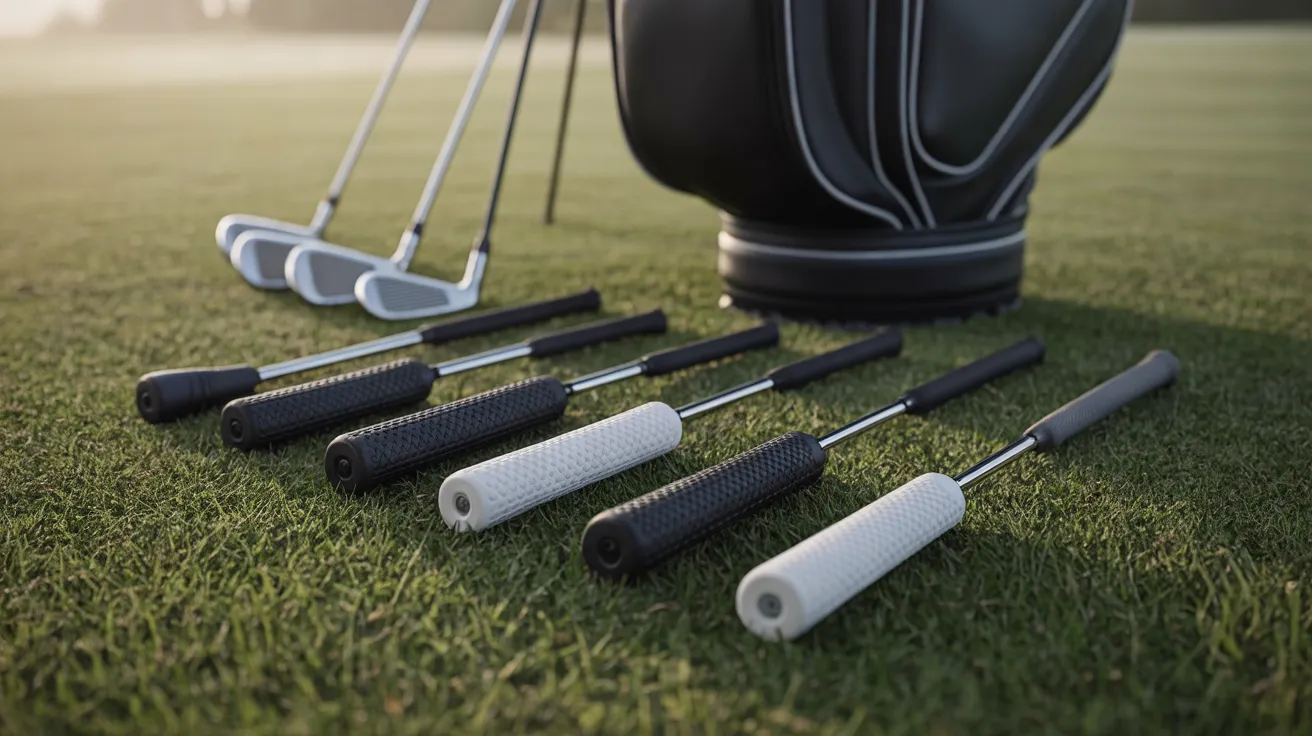
How we picked
We included buyable golf grip trainer products designed to teach hand placement or grip pressure. We compared price, materials, whether they fit a real club or club handle, size and portability, and whether they suit practice at home, the range, or pre-round warmups.
Tip: Choose a trainer that fits the clubs you practice with most, and check whether it teaches hand position, grip pressure, or both.
Grip trainer golf tools can fix in 10 swings what months of range balls often fail to correct: a clubface that arrives open, closed, or unstable because your hands never return to the same position twice. Most amateur grip problems start small—your lead hand creeps too far under, your trail palm gets too strong, your wrists overwork through impact—and those tiny errors can easily cost 10 to 20 yards of dispersion with mid-irons.
That’s why the 7 Best Golf Grip Trainers in 2026 matter more than they look on the shelf. A good trainer doesn’t just tell you where your hands should go; it builds a repeatable feel you can take from your garage to the range to the first tee.
Below the ranked list on this page, you’ve already seen the top picks. Here, I’m going deeper on who each type of golf grip trainer actually helps, which designs build real muscle memory, which ones frustrate beginners, and how to avoid buying a training aid that ends up in the trunk after one week.
Quick reality check: the best golf grip trainer is usually the one you’ll use for 5 minutes a day, 4 to 5 days a week—not the one with the most aggressive hand molds or the flashiest packaging.
Which of the 7 Best Golf Grip Trainers in 2026 actually helps your swing?
Not every golf trainer grip works the same way. Some are built to lock your hands into textbook placement on a full club, while others focus on wrist structure, takeaway shape, or pairing grip with tempo.
That distinction matters because a player fighting a slice needs something different from a player who already hits it straight but struggles with inconsistent contact.
Here’s the simplest breakdown from real-world use:
- Clip-on grip guides
Best for golfers who already own clubs they like and want a fast golf club grip trainer they can attach and remove in seconds. These are convenient, but the fit can vary slightly depending on grip size.
- Short-handle training clubs
These work well for indoor rehearsals and pre-round warmups. A grip trainer golf club with a molded handle gives clearer hand-position feedback than a removable clip for most beginners.
- Grip + tempo combo trainers
If your hands are fine at setup but fall apart once the club moves, a golf swing trainer grip model can be more useful than a static trainer. These help connect grip pressure, takeaway, and sequencing.
- Retractable or resistance-based designs
These are better for golfers who want swing-path feedback too, not just hand placement. The tradeoff is that they can distract from pure grip learning if you’re brand new.
Among the listed options on this page, the SKLZ Golf Grip Trainer and the tempo-and-grip combo model stand out for golfers who want a repeatable feel without overcomplicating the motion. The clip-on options, meanwhile, tend to suit players who want a lighter, lower-commitment grip golf trainer for range sessions.
What makes a grip trainer golf aid worth buying in 2026?
A useful golf grip trainer should do three things within the first session: put your lead hand on correctly, square your trail palm, and make bad placement feel obviously wrong. If it doesn’t create that contrast, it usually becomes just another piece of plastic in your bag.
Here are the features that actually matter:
- Clear hand-position molding
You want a trainer that gives immediate feedback on where the heel pad, lifeline, and thumbs belong. The best designs make a neutral grip feel natural after 20 to 30 reps, not 200.
- Realistic size and taper
A trainer that’s too bulky can teach you an artificial hold. For most players, a golf grip trainer club should feel close to a standard men’s or women’s grip profile, depending on what you normally play.
- Secure attachment or stable build
If a clip-on model rotates during practice, it defeats the purpose. Stability is especially important if you’re using a left hand golf grip trainer or a training aid for weaker lead-hand positioning.
- Useful for partial swings and rehearsals
The best aids aren’t limited to static setup. A solid golf trainer grip should still guide your hands during waist-high rehearsal swings and takeaway drills.
- Comfort over multiple reps
If the molded ridges dig into your fingers after 15 balls, you won’t use it enough to build muscle memory. This is one area where some ultra-rigid trainers lose to simpler designs.
Under the lower price range: which grip trainer golf options give real value?
In the entry-level bracket, simpler usually wins. You’re not paying for extra mechanics; you’re paying for one job done well—putting your hands on the club the same way every time.
The best budget-friendly options usually fit one of these profiles:
- Basic clip-on guide:
Good for beginners who want to convert a normal club into a golf grip trainer club without carrying extra gear.
- Compact molded handle trainer:
Best if you practice indoors and want a dedicated aid beside your putting mat or mirror.
- Single-purpose right-handed trainer:
Often the easiest option for newer players who don’t want mixed feedback from grip, path, and tempo all at once.
If you’re shopping at this tier, your goal should be repetition, not complexity. A simple best grip trainer golf choice that you actually use daily beats a more advanced training aid that asks too much from you in week one.
Mid-range grip trainer golf picks usually hit the sweet spot
This is the range where most golfers should shop. You tend to get better molding, stronger materials, and enough realism to bridge the gap between drill work and live swings.
This is also where the sklz golf grip trainer style products have historically done well: easy to understand, easy to use, and not so technical that a 15-handicap quits after two buckets.
Why mid-range often works best:
- Better durability for 100+ practice sessions
- More natural hand placement than ultra-cheap generic molds
- Better crossover from home drills to range use
- More consistent fit if it’s a clip-on golf club grip trainer
If you practice once a week, budget can work. If you practice 3 or more times per week, stepping up to the mid-range is usually worth it because the trainer will see enough reps to justify the better build.
Premium options: are the 7 Best Golf Grip Trainers in 2026 worth paying more for?
Sometimes yes, but only if you need more than static hand placement.
Premium grip trainer golf aids tend to combine grip guidance with one or two additional benefits:
- swing tempo feedback
- takeaway path cues
- resistance or extension mechanics
- more realistic training-club balance
The best use case for a premium model is the golfer whose grip breaks down under motion, not just at address. If your hands look perfect standing still but change by the top of the backswing, a combo-style golf swing trainer grip can be a better investment than a basic molded handle.
That said, premium doesn’t automatically mean better. If your only issue is a weak lead hand or inconsistent trail-hand placement, a simpler grip trainer golf club often solves the problem faster.
Right-handed vs left-handed golf grip trainer options: what actually changes?
This is where buyers make avoidable mistakes.
A left handed golf grip trainer is not just a mirrored version of a standard trainer; the pressure cues, thumb channels, and palm references flip completely. Using the wrong orientation can train bad habits faster than no trainer at all.
If you play left-handed, check for these specifics:
- It should be clearly labeled golf grip trainer left handed
- The lead-hand contour should match a left-handed setup
- The trail-hand channel should support your right palm placement, not fight it
- Reviews should mention fit and realism for lefty players specifically
A left hand golf grip trainer is worth seeking out if you’re serious about building repeatable mechanics. Too many lefties try to “make do” with right-handed training aids, and the feedback ends up being misleading.
How to use a grip trainer golf aid so it actually changes your swing
Most golfers use these wrong at first. They grip it once, make a few full-speed swings, then assume the training aid “doesn’t work.”
The fastest way to build skill is this 10-minute routine:
- Static setup reps — 2 minutes
Place your hands on the trainer, then release and repeat. Aim for 20 clean setups in a row without looking down after the first few.
- Half swings — 3 minutes
Make waist-high to waist-high swings. Focus on keeping the trainer’s hand cues stable through the takeaway and into the release.
- Slow full swings — 3 minutes
Go at 50 to 60% speed. If your fingers start regripping mid-swing, slow down again.
- Transfer to a real club — 2 minutes
Hit 5 to 10 balls immediately after. This is the key step; the brain needs the bridge from drill feel to live motion.
That’s the answer to both how to use grip trainer golf and how to use a grip trainer golf effectively: short reps, slow motion, then immediate transfer.
💡 Did you know: many teaching pros use block practice in sets of 15 to 25 reps for grip changes because hand position is a feel-based motor pattern, not just a visual correction. That’s why a few perfect rehearsals usually beat smashing 40 balls with a half-changed grip.
What the reviews usually reveal about grip trainer golf problems
Across this category, the complaints are surprisingly consistent. And yes, they’re predictable.
The most common issues buyers mention:
- Too rigid or uncomfortable
If the molded sections pinch your fingers, you’ll cut sessions short. Comfort matters because grip changes need repetition.
- Doesn’t match their actual grip size
Golfers with undersize or jumbo grips sometimes say a clip-on golf grip trainer club feels different from their gamer clubs.
- Works at setup, fails in motion
Some static aids are great for address but don’t help once the club starts moving. That’s where combo designs can outperform simple clips.
- Wrong handedness ordered
This happens more than you’d think, especially with a golf grip trainer left handed model.
- Overdependence
A few golfers start hitting balls well with the trainer attached, then struggle when they remove it. The fix is easy: alternate every 5 to 10 swings between trainer and normal club.
If you want a broader grip-performance perspective across sports, this resource has useful context on hand strength and control. Different sport, same principle: repeatable grip pressure beats brute force.
SKLZ, clip-on models, and combo trainers: which type wins for each golfer?
For most players, the decision is less about brand and more about practice style.
Use this cheat sheet:
- Best for total beginners:
A molded-handle golf grip trainer that clearly positions both hands.
- Best for range regulars:
A clip-on golf club grip trainer you can swap between clubs quickly.
- Best for players fixing both grip and sequencing:
A combo golf swing trainer grip model with tempo feedback.
- Best for indoor practice:
A short training club or compact handle that doesn’t require full ball striking.
- Best for lefties:
A true left handed golf grip trainer, not a universal design.
The sklz golf grip trainer category tends to appeal to golfers who want simplicity and portability. The retractable swing-focused option is more useful if your issue isn’t just hand placement, but how the grip holds up during motion.
If you also compare other golf gear before buying, Blogweb has a solid breakdown on choosing distance tools, and a guide to lightweight waterproof golf bags pairs well if you’re rebuilding your setup for the season.
Is the Scottie Scheffler golf grip trainer search worth following?
Searches like scottie scheffler golf grip trainer are popular because golfers want pro shortcuts. Fair enough—but a trainer only helps if it matches your actual miss pattern.
If you’re looking up what golf grip trainer does scottie scheffler use, the smarter question is this: does your problem come from grip, wrist angles, or swing path? A tour player’s training aid can be useful, but only if it addresses the same root cause.
That’s true in other grip-heavy sports too. You can see similar crossover ideas in best badminton grip tapes and even in unrelated product-comparison formats like the full story. Different gear, same buyer lesson: the best fit depends on how the tool changes feel under pressure.
Red flags that usually mean a grip trainer golf aid won’t help you
Skip a trainer if you notice any of these problems:
- It teaches an exaggeratedly strong or weak grip with no neutral reference
- It feels nothing like a normal club in your hands
- It can’t be used for slow-motion swings, only static posing
- It doesn’t clearly specify right-handed or golf grip trainer left handed compatibility
- Reviews repeatedly mention slipping, twisting, or cracking early
One more warning: if a product promises to fix grip, swing plane, release, and distance all at once, that’s usually too much. The best golf grip trainer solves one core problem cleanly.
For random product-hunt rabbit holes, you’ll also see odd redirects like go to page or cse.google.tt; don’t let messy discovery paths replace checking whether a trainer matches your handedness and swing fault.
The single best way to choose from the 7 Best Golf Grip Trainers in 2026
Start with your miss, not the marketing.
If you slice because your hands return differently every swing, choose a simple grip trainer golf aid that makes neutral placement automatic. If your setup is fine but your hands change once the club moves, choose a combo golf trainer grip model that trains motion as well as position.
Your one non-negotiable criterion: the trainer must match your handedness and your real practice environment. A perfect trainer you can’t comfortably use in your living room, garage, or range stall won’t build the reps that actually change your ball flight.
Frequently Asked Questions
how to use golf grip trainer
Start by making 20 slow setup reps without hitting a ball, then move to half swings before trying full shots. The fastest progress comes from using the trainer for 5 to 10 minutes and then immediately hitting a few balls with a regular club.
how to use sklz golf grip trainer
Use the sklz golf grip trainer first on short rehearsal swings so your lead hand and trail hand learn the molded positions. After a few minutes, switch to your normal club and recreate the same feel without the trainer attached.
what golf grip trainer does scottie scheffler use
Searches for what golf grip trainer does scottie scheffler use are common, but the more useful answer is that you should match the aid to your swing fault, not just a pro’s routine. A pro-style trainer only helps if your issue is the same combination of grip structure and hand action.
which golf grip trainer does scottie scheffler use
People ask which golf grip trainer does scottie scheffler use because tour-player association builds trust, but no single aid is automatically best for amateur golfers. If you need better address position, a simple golf grip trainer is often more effective than a more advanced motion-based tool.
how to hold a grip trainer golf
To hold a grip trainer golf aid correctly, place your lead hand first so the handle sits across the base of the fingers, then fit your trail hand into the molded guide. Your grip pressure should stay light—about 4 or 5 out of 10—so you learn control rather than tension.
No comments yet