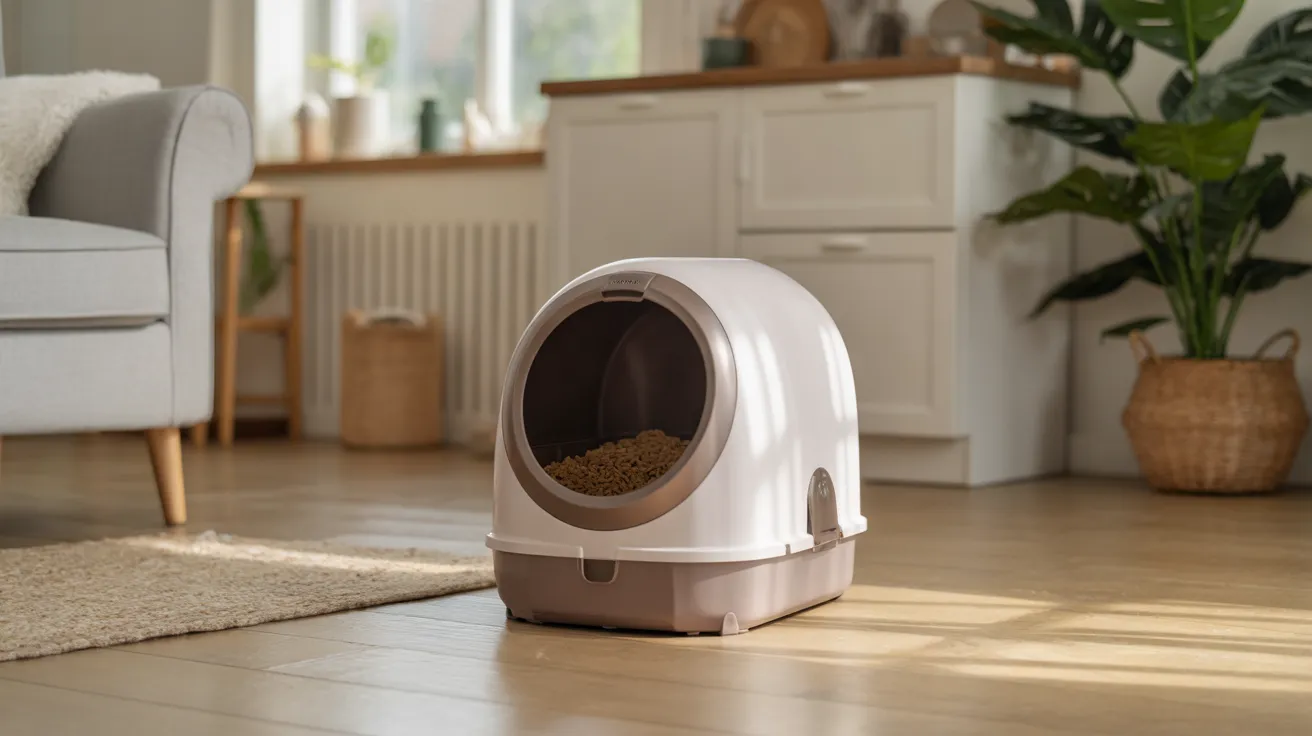
How we picked
We included buyable self-cleaning cat litter boxes with clear retail availability and comparable core functions. We checked litter compatibility, waste drawer capacity, footprint, entry height, cleaning cycle type, app dependence, warranty, and replacement part costs a reader can verify on product pages.
Tip: Measure both your floor space and your cat’s standing length before choosing; a compact unit can still be too small inside for larger cats.
If self cleaning cat litter has ever woken you up at 6 a.m. with a motor noise, a jammed rake, or that unmistakable smell of clumped urine baking in a drawer, you already know the marketing pitch and the real-world experience can be very different. The best units cut scooping time to near zero, but the wrong one can trade one chore for three new ones: sensor resets, litter tracking, and wasted bags.
That’s why the 7 Best Self-Cleaning Cat Litter Boxes in 2026 matter so much to real cat households. If you’re comparing the Mimfam, WARCAT, FEELNEEDY, Fumoi, Cumrige, and the other listed picks on this page, the smartest move is not obsessing over flashy app features—it’s matching the box to your cat’s size, litter habits, and your tolerance for maintenance.
Quick trust note: The ranked list and product scoring already appear above on this page, so this guide focuses on what actually helps you choose between them: size fit, odor control, safety sensors, setup friction, litter compatibility, and the review patterns that separate a helpful machine from a frustrating one.
Which of the 7 Best Self-Cleaning Cat Litter Boxes in 2026 is right for your cat size and home layout?
The biggest separator among self cleaning cat litter boxes is not the cleaning cycle. It’s usable entry space.
An open-top design usually feels less intimidating for larger cats and for cats switching from a standard pan. In practice, units like the Mimfam, WARCAT, and the no-app open-top option tend to work better for cats that hesitate around enclosed spaces, especially if your cat weighs 12 pounds or more or likes to turn around several times before eliminating.
Meanwhile, drum-style models with larger internal volume can be a better match for multi-cat homes because they hold more waste before needing a drawer empty. That’s where the Fumoi and Cumrige style of automatic self cleaning cat litter box often stands out: more capacity, more automation, and usually better long-gap performance if you’re emptying every 5 to 9 days instead of every other day.
Here’s the practical breakdown:
- Best for cautious cats: Open-top, wide-entry units with visible litter bed
- Best for large cats: Models with at least 20+ inches of turning space
- Best for apartments: Quieter motors and better drawer sealing matter more than app extras
- Best for multi-cat homes: Larger drum capacity plus reliable weight/safety sensors
- Best for tech-averse owners: Manual-button units beat app-dependent ones every time
If your cat currently uses a high-sided open box, switching to a compact enclosed robot too fast can trigger litter avoidance within 24 to 72 hours. That’s not rare. It’s one of the most repeated owner complaints with any self-cleaning cat litter box transition.
What makes self cleaning cat litter actually better than scooping by hand?
A good cat litter self cleaning system does three things better than manual scooping: it removes waste faster, traps odor earlier, and keeps the litter bed more consistently dry. That third point matters more than most buyers realize, because cats often reject boxes that feel damp or uneven underpaw.
The best units above also solve the “one cat used it, now nobody wants it” problem in multi-cat homes. In a standard pan, one missed scoop can mean 6 to 12 hours of odor buildup. In an automatic self cleaning cat litter unit, the waste is usually isolated within minutes after the cat leaves and the timer finishes.
That said, automation is not magic.
You still need to:
- Empty the waste drawer on schedule
- Wipe sensors every 7 to 14 days
- Deep-clean the waste path every 3 to 5 weeks
- Use the right litter texture so the machine can separate clumps cleanly
If you want broader pet-cleanup gear context, everything about dog paw cleaning reviews shows a similar truth: the easiest pet products are the ones with the fewest failure points.
What should you look for in the 7 Best Self-Cleaning Cat Litter Boxes in 2026?
If you’re choosing among the 7 Best Self-Cleaning Cat Litter Boxes in 2026, these are the specs that actually predict satisfaction.
1. Entry style: open top vs enclosed drum
Open-top designs usually win for transition ease. Enclosed designs usually win for odor containment.
If your cat has never used a hooded box, start with an open-top self cleaning cat litter pan. If odor is your top complaint and your cat already tolerates covered boxes, enclosed can work better.
2. Safety sensor count and responsiveness
Look for multiple sensors, not just one weight trigger. Models advertising 8 to 10 sensors generally inspire more confidence because they can pause cleaning if a cat approaches mid-cycle.
This is one reason the higher-rated automatic cat litter box self cleaning models tend to outperform bargain units. A cheap motor is annoying; a bad sensor is a deal-breaker.
3. Litter compatibility
Most cat litter automatic self cleaning units work best with hard-clumping litter in a medium granule size. Very light crystals, pellet litter, or oversized grains can cause poor sifting, stuck waste, or false-full drawers.
Pro tip: If clumps break apart during rotation or raking, the problem is often the litter, not the machine. Switching to a tighter-clumping formula can improve waste separation within one refill.
4. Waste drawer sealing
A drawer that looks large but leaks odor around the rim will disappoint fast. The difference between a “good” and “great” best self cleaning cat litter experience is often a rubber gasket, a tighter bag ring, or a more enclosed waste drop path.
5. Step height and senior-cat access
A unit can be excellent on paper and still fail if your older cat won’t climb into it. Entry height above roughly 10 to 12 inches can become a real barrier for arthritic cats or short-legged breeds.
6. Cleaning access for humans
If you need a screwdriver or a 20-minute disassembly just to wash the tray, you’ll clean it less often. The best rated self cleaning cat litter box for long-term use is often the one with fewer hidden crevices and easier tray removal, not the one with the prettiest app dashboard.
Which price range makes the most sense for self-cleaning cat litter boxes?
The sweet spot depends on how many cats you have and how much mess you’re trying to eliminate.
Lower range: best for one cat and first-time automation buyers
This tier usually includes simpler units with fewer app features and smaller waste bins. They can still be solid self cleaning cat litter boxes if your cat is under 12 pounds, uses the box predictably, and you don’t mind emptying more often.
Best for:
- One-cat homes
- Small apartments
- Buyers testing whether a self cleaning cat litter box fits their routine
Tradeoffs:
- Smaller capacity
- Louder cycles
- Less odor isolation
Mid-range: where most households get the best value
This is where many of the 7 Best Self-Cleaning Cat Litter Boxes in 2026 deliver the best balance. You’re typically getting better sensors, sturdier internals, and fewer litter jams without paying for features you may never use.
Best for:
- One to two cats
- Owners who want reliable daily automation
- Homes that need better odor control than a basic self-cleaning cat litter setup provides
Premium range: best for multi-cat homes and minimal-maintenance routines
If you have two or three cats using one box, premium capacity matters. A larger automatic self cleaning cat litter box can save you from drawer overflow, repeated cleaning prompts, and messy waste backup.
Best for:
- Multi-cat homes
- Busy schedules
- Owners prioritizing app alerts, bigger bins, and fewer interventions
For readers who like comparing household gear categories, www.google.cg is a reminder that “best value” usually lives in the middle tier, not the cheapest or most expensive end.
Open-top or app-controlled: which style wins in real homes?
This is one of the biggest practical questions around best cat litter self cleaning systems.
Open-top models usually win in these situations:
- Your cat dislikes covered spaces
- You’re transitioning from a standard open pan
- You want easier visual monitoring of stool and urine clumps
- You don’t care about remote notifications
App-connected models usually win if:
- You’re away from home for long stretches
- You track usage across multiple cats
- You want full-drawer alerts before odor becomes obvious
- You like data on frequency, weight changes, or use timing
Here’s the catch: app features are only useful if the hardware is already dependable. A buggy app on a solid box is survivable. A pretty app on an unreliable automatic self cleaning cat litter unit is just expensive frustration.
What review patterns separate a good self-cleaning cat litter box from a bad one?
The most revealing complaints are surprisingly consistent across self-cleaning cat litter boxes.
Good review signals
- Cats adapt within 3 to 7 days
- Waste drawer lasts at least 4 days for one cat
- Odor remains controlled unless the drawer is full
- Clumps drop cleanly without smearing the interior
- Safety sensors pause instantly when a cat re-approaches
Red flags buyers mention again and again
- Wet litter sticking to the liner after less than a week
- Units that require daily shaking or manual leveling
- Entry steps too narrow for large cats
- False “full bin” alerts after only 1 to 2 uses
- Cycles loud enough to startle nervous cats
A lot of “bad product” reviews are actually mismatch problems. For example, a shy cat forced into an enclosed self-cleaning cat litter box may never adapt, even if the machine itself works exactly as designed.
💡 Did you know: Cats often prefer litter depth around 2 to 3 inches, and too much litter can interfere with rotation or raking. Overfilling is one of the fastest ways to reduce performance in a self cleaning cat litter pan.
How do you set up self cleaning cat litter for the fewest problems?
Start with the machine powered off and placed in the same general area as the old box. Sudden location changes plus a new device can double refusal risk.
Then follow this transition method:
- Add the litter type recommended for the unit, not your cat’s old non-clumping favorite.
- Keep the old box nearby for 3 to 5 days.
- Manually place one used clump from the old box into the new one so it smells familiar.
- Run the cleaning cycle only after the cat leaves and seems calm around the noise.
- Remove the old box only after the new box is used consistently for 48 hours.
This matters because even the best rated self cleaning cat litter box can fail if the introduction is rushed.
For odd deep-link examples across review ecosystems, you’ll sometimes see unrelated resources like open link, Dog Names, or Blogspot show up in syndicated content. Ignore the noise and focus on repeated user reports about odor, sensor reliability, and ease of cleaning.
Which of the 7 Best Self-Cleaning Cat Litter Boxes in 2026 is best for your specific use case?
You don’t need another ranking here. You need a shortcut.
Use this matching guide instead:
- Best for large cats: Choose an open-top or extra-roomy model from the list above, especially if your cat sprawls while digging.
- Best for two-cat homes: Pick one of the higher-capacity drum units with app alerts and a larger waste drawer.
- Best for seniors or mobility-limited cats: Prioritize lower entry height over every other feature.
- Best for odor-sensitive apartments: Focus on drawer sealing and enclosed waste storage, not just automatic cycling.
- Best for simple operation: The no-app or low-tech open-top options are often easier to live with than feature-heavy robots.
If your cat is messy with scatter, a small landing step helps more than many people expect. That’s because litter tracking often drops most in the first 18 to 24 inches outside the box, not across the whole room.
For pet-adjacent novelty shopping, cat photo sticker custom is fun, but it won’t solve ammonia smell. A properly matched self cleaning cat litter box will.
Final buying advice for the 7 Best Self-Cleaning Cat Litter Boxes in 2026
The single most important criterion is fit between your cat’s body size and the box’s usable interior space. A machine with better sensors, quieter operation, and stronger odor control still won’t work if your cat feels cramped or refuses enclosed entry.
If you’re stuck between two options in the 7 Best Self-Cleaning Cat Litter Boxes in 2026, choose the one your cat is most likely to use confidently on day one. Consistent use beats advanced features every time, whether you’re buying your first self-cleaning cat litter unit or upgrading from a basic automatic self cleaning cat litter box.
If you want one last example of how niche product content spreads across the web, you may also run into links like https://fitprops.com. Useful buying decisions still come down to the same three real-world checks: sensor safety, litter compatibility, and enough space for your cat to turn comfortably.
Frequently Asked Questions
what is the best self cleaning cat litter box
The best self cleaning cat litter box is usually the one that matches your cat’s size, comfort level, and your cleaning routine. For most households, the best option combines reliable safety sensors, strong odor control, and enough interior space for a full turn without crowding.
are self cleaning cat litter boxes worth it for one cat
Yes, they’re often worth it for one cat if you want more consistent cleanliness and less daily scooping. The value is strongest when the unit controls odor well and your cat adapts within the first week.
how to get a cat to use an automatic self cleaning cat litter box
Start by placing the new box near the old one and using the same or a similar clumping litter depth of about 2 to 3 inches. Most cats transition better if the automatic cycle stays off or delayed for the first few days, so the noise doesn’t scare them.
what litter works best in a self cleaning cat litter box
Most self cleaning cat litter boxes work best with medium-grain, hard-clumping litter that forms solid clumps quickly. Lightweight crystals, pellets, and weak clumping formulas often cause poor separation, smearing, or sensor-related messes.
how often do you empty a self-cleaning cat litter box
For one cat, many units need to be emptied every 4 to 7 days, though larger-capacity models can stretch longer. In a two-cat home, expect to check the waste drawer every 2 to 4 days unless you’re using a larger automatic cat litter box self cleaning model.
No comments yet