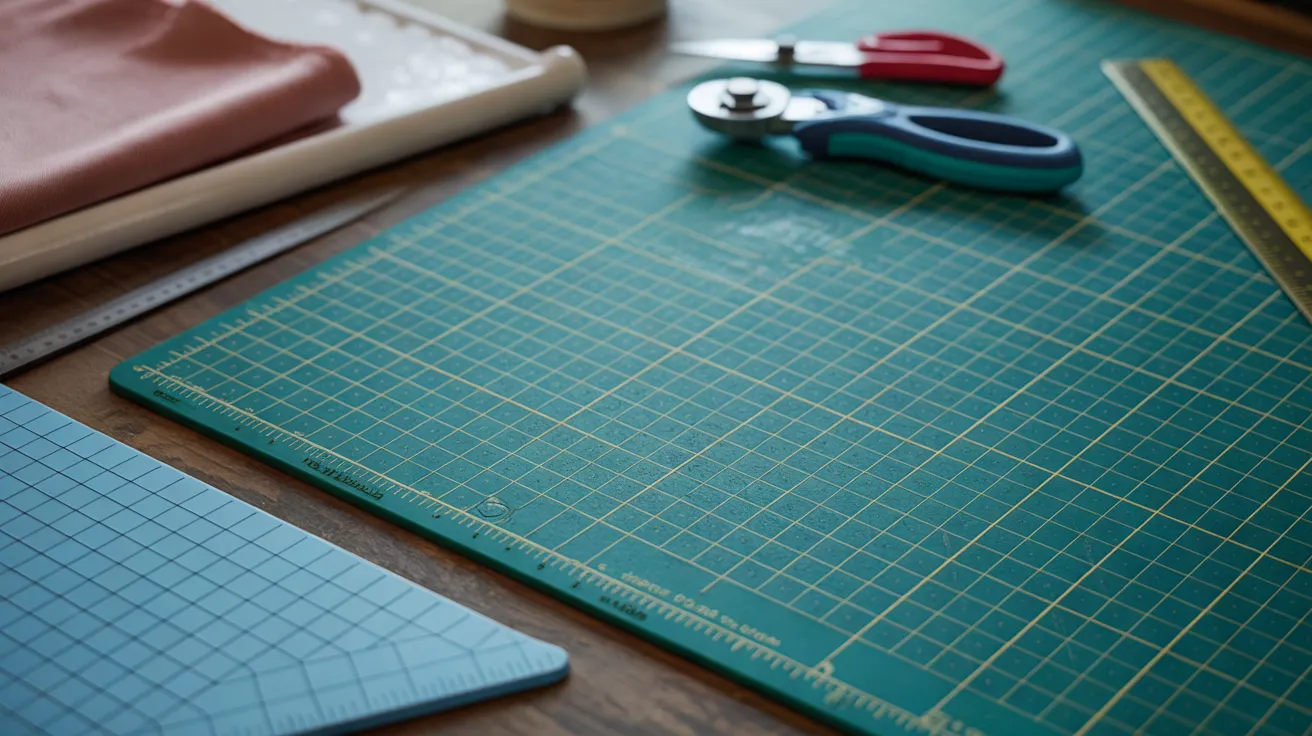
How we picked
We looked at widely available self-healing cutting mats sold by major retailers and compared listed dimensions, thickness, material, printed grid layout, and whether they are single- or double-sided. We also checked buyer-facing details such as price, claimed warp resistance, and suitability for rotary cutters, craft knives, and sewing or quilting use.
Tip: Choose a mat larger than your most common fabric or paper size so you can make long cuts without repositioning the material.
The cutting mat self-healing category has gotten dramatically better in the last few years, but the gap between a mat that lasts 6 months and one that stays flat, readable, and cut-friendly for 3+ years is still huge. If you’ve ever watched a rotary blade start skipping in old cut grooves, or had fabric drift because the grid wore off faster than the surface, you already know the mat matters almost as much as the cutter.
Below the ranked list of the 7 Best Self-Healing Cutting Mats in 2026, the real question is simpler: which type of mat fits the way you actually cut, sew, quilt, craft, or trim every week? That’s what this guide answers. You’ll get a practical breakdown of sizes, thickness, grid usability, edge durability, maintenance, and the review patterns that separate a dependable self-healing cutting mat from a disposable one.
Quick takeaway: For most people, the best value sits in the 18" x 24" to 24" x 36" range, with a 5-layer or density-upgraded core, double-sided grid, and enough thickness to resist deep rotary grooves.
Why the 7 Best Self-Healing Cutting Mats in 2026 aren’t all built for the same job
A small desktop mat and a self-healing cutting mat 24x36 may both be labeled “self-healing,” but they solve very different problems. A 12" x 18" mat is great for paper crafts, sticker sheets, and occasional trimming, while a 24" x 36" mat is what you want if you’re cutting quilt blocks, garment panels, or long bias strips without constant repositioning.
That’s why the ranked products on this page aren’t interchangeable.
For example, the compact pink option works well if you need a portable self healing cutting mat for rotary cutter use on a smaller table. Meanwhile, the extra-large gray and oversized density-upgraded mats are better if you’re dealing with repeated sewing layouts and want fewer alignment resets per project.
Best use cases by mat size
- 12" x 18" class
- Best for cardmaking, vinyl trimming, and hobby knives
- Easier to store vertically
- Usually enough for crafters cutting pieces under 10" wide
- 18" x 24" class
- The sweet spot for many sewists
- Handles fat quarters, pattern adjustments, and routine rotary cuts
- Often the most balanced option for home tables
- 24" x 36" class
- Best for quilting, garment sewing, and batch cutting
- Reduces misalignment from moving fabric repeatedly
- The better choice if you want a self healing cutting mat large enough for serious weekly use
- Extra-large / largest formats
- Ideal if you’re searching for the largest self healing cutting mat
- Works best in dedicated craft rooms
- Less portable, but more efficient for repetitive cuts
Which cutting mat self-healing size makes the biggest difference in daily use?
If you cut fabric more than once a week, size usually affects your results more than color, printed angle lines, or marketing claims. A mat that’s too small forces extra folds and resets, and each reposition adds a chance for drift of 1/16 inch or more—enough to throw off quilt piecing by the end of a block set.
For sewing and quilting, an 18" x 24" mat is the minimum I’d recommend for comfortable use. If you regularly trim yardage, the fiskars cutting mat self-healing in the larger format and the other 24" x 36" picks on this page make more sense because they reduce handling and keep your ruler fully supported.
If you mostly sew: choose surface area first
A sewing self healing cutting mat should let your ruler sit flat with no overhang. That matters because unsupported ruler edges are one of the fastest ways to nick a mat, tilt a blade, and get a wavy cut line.
The best self-healing cutting mat for sewing usually has:
- A visible grid that doesn’t fade quickly
- Enough thickness to prevent trenching
- A flat lay with minimal corner lift
- Clear angle markings for bias and strip cutting
If you’re comparing two similarly rated mats, pick the larger one if your table can handle it. That single choice usually saves more time than any other feature.
What to look for in the 7 Best Self-Healing Cutting Mats in 2026
You don’t need a huge checklist. You need the right 5.
1. Multi-layer construction, ideally 5-ply or density-upgraded
A genuine self-healing cutting mat works because the top layer flexes and closes around shallow blade marks instead of leaving permanent open grooves. In practice, denser cores hold up better under rotary pressure, especially if you cut cotton, felt, faux leather, or stacked paper.
If the product description mentions 5-layer construction or upgraded density, that’s usually a good sign for durability.
2. Size that matches your actual project width
A cutting self healing table mat for a kitchen counter is very different from one meant for a sewing station. If your ruler is 24" long, a mat narrower than your common cuts will slow you down immediately.
A good rule:
- Paper and hobby work: 12" x 18"
- Mixed crafts: 18" x 24"
- Quilting and apparel sewing: self-healing cutting mat 24x36
3. Grid readability after repeated use
Some mats are durable but frustrating because the lines become hard to read under bright LEDs or after lots of wiping. A strong cutting mat self healing pick should keep contrast visible on both sides, especially around common 1", 1/2", and 1/4" reference marks.
4. Flatness and warp resistance
Heat is the enemy. Reviews for lower-performing mats often mention edge curl, center bulge, or wave after being stored near a window, radiator, or even inside a hot car trunk.
A reliable self healing cutting mat large should lie flat within a day or two of unpacking and stay that way in normal indoor conditions.
5. Rotary compatibility
Not every craft mat handles a rotary blade equally well. If you’re buying a self healing cutting mat for rotary cutter, prioritize thickness and recovery over decorative colors or unusual printed layouts.
Pro tip: Rotate your mat 180 degrees every few sessions. That spreads wear more evenly across your most-used cutting lanes and can noticeably extend the life of the center grid.
Best options by budget: what changes under $25, in the mid-range, and in premium sizes?
Price usually scales with size first, thickness second. That’s why a smaller premium mat can cost about the same as a mid-size standard mat.
Under the entry-level range: best for occasional craft use
At the lower end, you’ll mostly see small mats aimed at:
- Paper cutting
- Scrapbooking
- Vinyl trimming
- Light hobby knife use
These are fine if you cut a few times a month. They’re less ideal for long-term rotary use because repeated pressure creates visible wear faster.
Mid-range: where most people should shop
This is the strongest value zone for a self-healing cutting mat for sewing. You’ll usually find:
- 18" x 24" formats
- Double-sided grids
- Better line clarity
- More durable top layers
If you’re deciding between a compact mat and a mid-range one, the mid-size option is usually worth the jump if you sew weekly.
Premium and oversized: best for quilting and dedicated workstations
The premium tier is where the largest self healing cutting mat options live. You’re paying for more working area, better wear resistance, and fewer fabric repositioning errors.
That’s where products like the density-upgraded oversized mat and the extra-large gray fiskars self-healing cutting mat style options stand out. For quilters and serious sewists, bigger really does equal faster.
For related floor-comfort setups in long crafting sessions, you can see the details on standing-desk mats if your cutting table keeps you on your feet for an hour or more.
What real-world reviews usually reveal about self-healing mats after 6 months
The most useful reviews are rarely the 5-minute unboxing reactions. The patterns that matter show up after repeated cuts.
Here’s what buyers consistently praise in better mats:
- Blade marks that become less visible after resting
- Grid lines that remain readable after regular cleaning
- No slipping under rulers
- Corners that stay flatter over time
And here’s what weaker mats get criticized for:
- Deep grooves from standard rotary passes
- Surface glare that hides measurement lines
- Warping from mild heat exposure
- Odor that lingers longer than expected
- Printed lines wearing faster than the mat itself
One reason many sewists keep returning to established options like a fiskars cutting mat self healing format is consistency. Even among similarly sized mats, predictable thickness and line accuracy matter more than flashy extras.
If you also compare mat materials used in fitness gear, guides on waterproof yoga mats are a useful reminder that surface texture and heat response vary a lot between PVC-style products, even when they look similar online.
Is a fiskars self healing cutting mat better than other styles on this page?
For many buyers, the answer is: often yes for grid clarity and familiarity, but not always for value per square inch. The listed mats on this page include both established and budget-friendly options, and some users will get better results from the density-upgraded oversized model or a simpler mid-size craft mat depending on workspace and frequency.
The fiskars self healing cutting mat options are especially good if you want:
- Familiar quilting measurements
- Reliable double-sided use
- Widespread compatibility with standard rulers
- A lower learning curve if you’ve used sewing mats before
That said, the smaller pink and standard multi-ply alternatives can be smarter if your priority is portability or saving desk space.
For broader product-comparison reading styles, you can wordflicks.blogspot.com as an example of how structured review guides separate specs from real use; the same mindset helps when comparing craft mats.
7 Best Self-Healing Cutting Mats in 2026 for sewing, quilting, and rotary cutters: who should buy what?
You’ve already seen the ranked list above, so here’s the practical match-up.
Choose a smaller mat if you:
- Craft at a desk, not a sewing table
- Cut paper, decals, templates, or patch pieces
- Need something easy to store in a drawer
- Want a light self healing cutting mat for rotary cutter but only for short cuts
Choose an 18" x 24" mat if you:
- Sew every week
- Need room for rulers and fabric stabilization
- Want the best balance between space and storage
- Prefer a dependable self-healing cutting mat for sewing without going oversized
Choose a 24" x 36" or larger mat if you:
- Quilt often
- Cut garment sections or long strips
- Hate repositioning fabric
- Want a self-healing cutting mat 24x36 that feels like a permanent workstation tool
A lot of buyers overestimate how much portability matters and underestimate how annoying constant realignment becomes. If your table can fit a large mat, the bigger format usually wins.
How to make a self-healing cutting mat last longer without babying it
A mat doesn’t need special treatment, but it does need basic care.
Do this regularly
- Store it flat whenever possible
- Keep it away from direct sun and heaters
- Wipe lint and thread fragments off after cutting
- Rotate it to distribute wear
Avoid this
- Ironing near the mat
- Leaving it in a hot car
- Rolling it tightly
- Using heavily dulled blades that dig instead of slice
A fresh rotary blade can actually be gentler on the mat than a dull one. Dull edges drag, press harder, and create deeper channels.
If you like comparing how different surfaces age under body weight, pressure, and heat, you can also best thick yoga mat 2026 explained for an interesting material parallel.
What shoppers miss most often before buying a cutting mat self-healing model
The biggest miss isn’t thickness. It’s table fit.
Measure your work surface before you buy, and leave at least 2 to 4 inches of clear space around the mat if you use long rulers. A mat that technically fits but crowds the table edge is much harder to use accurately.
Second, check whether you prefer inches only or a mixed-angle layout. Some crafters love dense printed guides; others find them visually busy and easier to misread.
Third, remember that a sewing self healing cutting mat is not the same as a disposable craft pad. If you sew frequently, replacement cycles get expensive fast, so buying one size up usually pays off.
For unrelated but useful comparison-shopping habits, product-research readers sometimes find out more from niche roundup formats that surface repeat review complaints quickly.
Final buying advice for the 7 Best Self-Healing Cutting Mats in 2026
If you’re choosing between several strong options from the list above, make size your tiebreaker. A durable mat you can cut on in one pass is almost always a better long-term buy than a smaller mat with nicer branding or slightly prettier grid styling.
For most readers, the safest pick is an 18" x 24" or 24" x 36" self-healing cutting mat with a dense core, double-sided grid, and stable flatness reviews. If you sew or quilt weekly, don’t undersize your workspace.
You can also check source if you like exploring how specialty materials are discussed across categories, or visit site for another example of aggregator-style linking patterns that show up in product research.
Frequently Asked Questions
what is a self healing cutting mat
A self-healing cutting mat is a multi-layer cutting surface designed to close up shallow blade marks after use. It protects your table, improves cutting accuracy, and extends the life of rotary blades and craft knives.
what is a self-healing cutting mat
A self-healing cutting mat uses flexible surface layers that separate under the blade and then settle back together. That “healing” effect reduces permanent grooves compared with hard plastic or cardboard cutting surfaces.
how does a self healing cutting mat work
It works by using layered material that absorbs the blade edge without staying split open after each cut. The cut line becomes much less visible over time, especially when the blade is sharp and pressure is controlled.
how does a self-healing cutting mat work
The blade passes into the top layer, and the mat’s flexible structure closes around the cut path after the pressure is removed. Better mats recover faster and show fewer deep tracks after repeated rotary cutting.
how to clean a self-healing cutting mat
Wipe the mat with a soft cloth, lukewarm water, and a small amount of mild soap, then dry it flat. Avoid harsh cleaners, very hot water, or prolonged sun exposure, because heat can warp the surface and fade the grid.
No comments yet