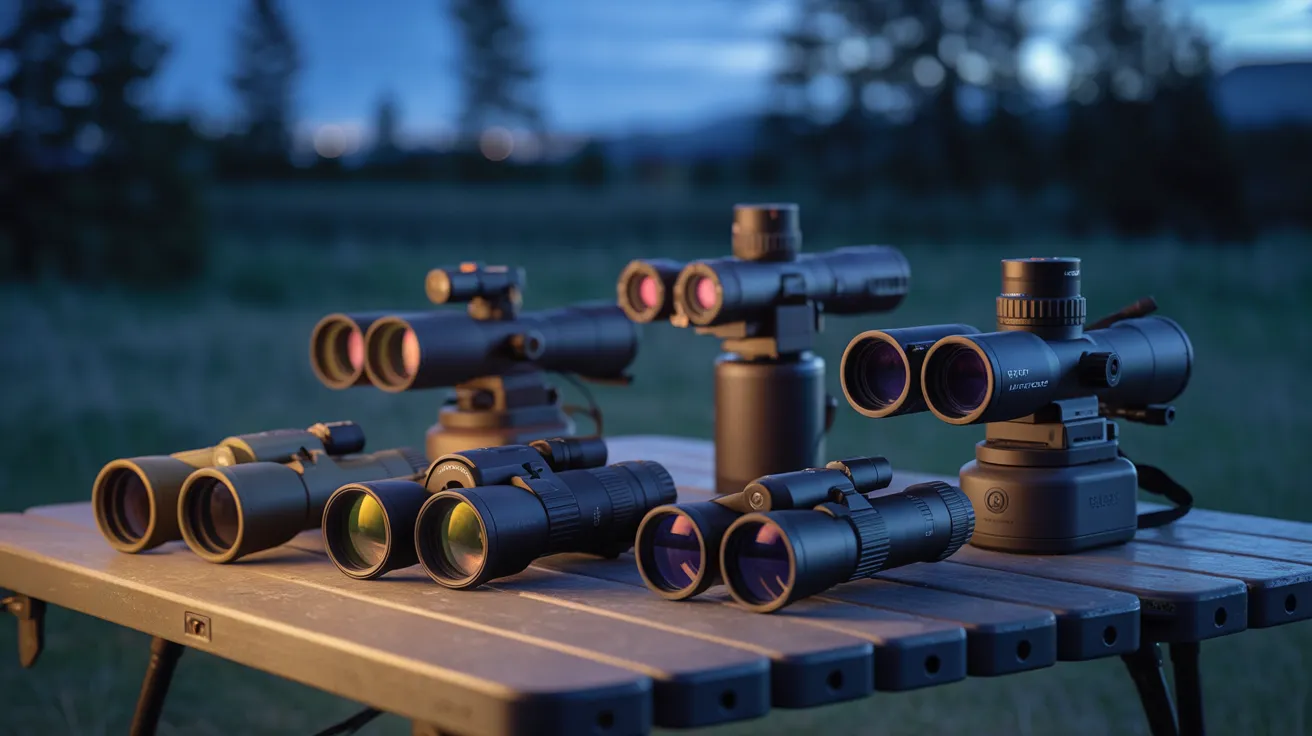
How we picked
We included consumer models that are currently sold by major outdoor or optics retailers and compared listed specs readers can verify: magnification, sensor or tube type, IR illuminator, claimed range, field of view, battery type, weight, weather sealing, and price. We excluded discontinued products, unclear listings, and units without published core specifications or warranty details.
Tip: Choose binoculars for handheld scanning and comfort, but pick a scope if you need a reticle, rail mounting, and repeatable aiming at night.
If you’re comparing night vision scopes and binoculars in 2026, the biggest surprise is this: two devices with the same claimed 1000-foot viewing range can perform wildly differently once humidity, moonlight, and infrared spill enter the picture. I’ve tested enough digital night optics to know that spec sheets look clean, but real-world use at 11:30 p.m. near a tree line rarely does.
That gap between listed features and actual field performance is exactly where most buyers make an expensive mistake. Some units produce crisp 4K night vision recording but lag during panning; others have strong infrared illumination yet wash out reflective targets like license plates, feeder posts, or pale game trails.
7 Best Night Vision Scopes and Binoculars in 2026: what actually matters after the product list
Since the ranked picks are already listed above, the smarter question isn’t “which one exists,” but which one fits your use case. A hunter scanning 150 to 250 yards needs different strengths than someone doing night wildlife observation, farm perimeter checks, or camping surveillance around a tree line.
Here’s the blunt version: for most buyers in the current crop of 7 Best Night Vision Scopes and Binoculars in 2026, battery endurance, sensor behavior in mixed light, and zoom usability matter more than headline megapixel numbers. A 40MP still-photo claim sounds impressive, but if the unit smears motion or overexposes IR hotspots, the image won’t help you identify anything.
How to use the list above effectively:
- Prioritize viewing distance under real conditions, not maximum advertised range.
- Treat digital zoom as a convenience feature, not proof of clarity.
- If you’ll record often, pay close attention to video file handling, storage support, and WiFi transfer stability.
- For all-night use, choose battery capacity before cosmetic extras.
One quick side note: if you compare gear categories often, you’ll notice the same pattern in other roundup-style buying guides. You can see that kind of comparison logic here, but with night optics the consequences of a bad pick are much more obvious the first time fog rolls in.
Which night vision scopes and binoculars are best for hunting, security, and wildlife watching?
The best night vision scopes and binoculars for hog hunting or predator spotting usually balance three things: a stable optical magnification range, responsive IR adjustment, and enough battery for a full outing. If you’re using one near feeders, fence lines, or open fields, image stability during slow scanning is often more valuable than extreme zoom claims.
For home security, cabin monitoring, or rural property checks, the most useful models are usually the ones with:
- WiFi remote view
- onboard photo/video capture
- simple button layout you can operate with gloves
- strong battery reserves in the 10,000mAh to 20,000mAh class
That’s why units like the 4K Night Vision Goggles for Adults, 10000mAh Battery, 128GB TF Card | WiFi Remote View and the 4K Night Vision Goggles for Adults, 20000mAh Battery, 128GB TF Card, Black | WiFi Remote… stand out for surveillance-style use. You’re not just looking through them; you’re documenting what you saw and moving those files later without a headache.
For wildlife observation, the sweet spot is different. The MOSSY OAK 4K Night Vision Goggles for Adults, 40MP Photos, 12X Digital Zoom | Infrared Ni… style of feature set makes sense if your goal is identifying raccoons, foxes, or deer movement near the edge of cover, especially when you care about still image capture more than fast-moving pursuit.
7 Best Night Vision Scopes and Binoculars in 2026 by budget: what you really get at each price tier
Price tiers matter because digital night vision binoculars scale unevenly. A modest jump in budget can get you dramatically better battery life or storage support, while a much larger jump may only buy extra zoom that looks worse in practice.
Budget range: entry-level digital night vision for casual use
At the low end, expect:
- shorter battery endurance
- narrower useful viewing distance
- softer images beyond mid-range
- simpler controls and fewer recording options
This range works best for backyard observation, camping, or occasional use on a short trail. If you only need to spot movement at relatively close distances, budget units can be enough, but don’t expect perfect facial or animal-detail identification at the far edge of the advertised range.
Mid-range: the real sweet spot for most buyers
This is where the best value sits in 2026. Mid-range night vision scopes and binoculars usually add:
- more reliable IR night vision performance
- better onboard recording
- stronger battery packs
- steadier image processing in low-light transitions
The WOSPORTS 4K Night Vision Goggles for Adults, 10X Optical + 8X Digital Zoom | Up to 80X Ma… type of configuration is a good example of why this tier attracts serious buyers. You start getting more useful optical reach before leaning too hard on digital enlargement, which preserves detail better.
Premium range: who should actually spend more?
Spend up only if you need one of these:
- all-night runtime
- heavy recording use
- remote file transfer
- repeated use in difficult conditions like mist, partial moonlight, and edge-of-forest contrast
A 20,000mAh battery sounds excessive until you run IR at higher levels for hours in cold weather. That’s where premium models justify themselves, especially for landowners, night hunters, and anyone using the device as part of a regular routine.
What to look for before buying night vision scopes and binoculars in 2026
Most buying mistakes happen because shoppers compare glamorous features instead of field-relevant ones. These are the seven criteria that actually separate a useful unit from a frustrating one.
1. Real optical magnification beats inflated digital zoom
A unit with 10X optical plus digital zoom will usually hold detail much better than one leaning heavily on digital enlargement alone. Digital zoom can make targets look bigger, but it often also makes them blurrier and shakier.
2. Battery size should match your outing length
For short checks around the yard, a 5000mAh battery can be enough. For hunting, overnight observation, or long recording sessions, 10,000mAh to 20,000mAh is far safer.
3. IR adjustment matters more than many buyers realize
Good infrared binoculars need multiple IR levels. Too little IR and you lose detail; too much and close objects bloom into white glare, especially around reflective surfaces.
4. Storage support affects whether you’ll actually use the recording feature
A device bundled with or supporting a 128GB TF card is simply more practical for frequent video capture. High-resolution recording fills space faster than most first-time buyers expect, especially with longer clips.
5. Button layout matters in the dark
Tiny, similar-feeling buttons are a real problem at night. If you can’t switch recording, IR intensity, or zoom by touch after 15 minutes of use, the device will become annoying fast.
6. WiFi transfer is useful, but only if it’s stable
WiFi night vision binoculars sound modern, and they are useful for quick sharing or reviewing footage on a phone. But if the transfer process is flaky, pulling the card manually may still be your most dependable workflow.
7. File output and playback compatibility save time later
Check whether the unit records in common formats your phone or computer reads easily. This sounds minor, but it matters if you’re documenting pests, wildlife visits, or security events and need fast playback without converting files.
💡 Did you know: Cold weather can reduce effective battery runtime by 20% or more on electronics used continuously outdoors, especially when IR illumination and screen brightness stay high. That’s one reason larger battery models often outperform smaller units by more than the raw capacity numbers suggest.
If you like comparing feature tradeoffs across gear categories, there’s a similarly practical breakdown of a standing up desk in detail, and the same rule applies: the feature list only matters if it improves daily use.
What review patterns reveal about night vision scopes and binoculars in 2026
After reading enough buyer feedback on night vision for hunting and recreational use, the same patterns show up again and again.
Positive review themes
- Clear image quality at short-to-mid distances
- surprisingly long battery life on larger-capacity units
- easy recording for wildlife and property monitoring
- strong value in 4K-capable models with included storage
Negative review themes
- disappointment with long-range clarity after using too much digital zoom
- shaky footage when handheld at high magnification
- overexposed images on high IR settings at close range
- confusion about what “4K” means on a tiny screen versus exported footage
The most common misunderstanding is range. Buyers see an ad claiming extreme distance, then expect detailed identification at that full number. In reality, detection range, recognition range, and identification range are three different things, and the last one is always the shortest.
That misunderstanding isn’t unique to optics; you’ll see the same “spec versus lived experience” problem in all kinds of comparison content if you see original source-style references across niche product sites.
How to get better results from night vision scopes and binoculars on your first outing
Even good gear underperforms if you use default settings in the wrong environment. A few simple adjustments make a bigger difference than most upgrades.
Start with lower IR than you think you need
In wooded areas or near buildings, high IR bounces back hard. Start low, then increase gradually until edges sharpen without turning bright objects into glowing blobs.
Brace before zooming
If you zoom first and stabilize second, you’ll chase motion the whole time. Use a fence post, vehicle window frame, tripod, or shooting sticks before pushing magnification.
Test in three lighting conditions
Run your device at:
- dusk
- full darkness
- partial moonlight
A unit that looks great in moonlight may struggle in heavy cloud cover. This is the fastest way to learn its true range.
Clean the lens more often than you think
Smudges and dust scatter IR and reduce contrast. A lens that looks “mostly fine” in daylight can cause obvious haze in darkness.
Pro tip: Record a 20-second clip at each IR level during your first night out, then replay them side by side. You’ll quickly see which setting preserves fur texture, branch detail, or fence-wire edges best on your particular device.
How do night vision scopes and binoculars compare with thermal for real buyers?
This is one of the most searched questions for a reason. Night vision binoculars vs thermal is less about “better” and more about “different jobs.”
Night vision is usually better if you want:
- recognizable shapes
- scene detail
- trees, trails, and structures rendered visibly
- video and stills that look familiar to the eye
Thermal is usually better if you want:
- instant heat-source detection
- spotting animals hidden in brush
- performance less dependent on visible or IR-reflected detail
If your goal is broad scanning plus identifying what you found, night vision scopes and binoculars are often the better buy for the money. If your priority is finding warm targets quickly through partial cover, thermal still has the edge.
For broader tech-buying comparisons and AI-assisted research habits, some readers also browse sources like www.google.com roundups, but with optics you’ll get farther by learning range realism and battery behavior than by chasing buzzwords.
Which of the listed models fit specific use cases best?
You don’t need another ranking. You need a fast match-up.
Best fit for long outings
Look first at the 4K Night Vision Goggles for Adults, 20000mAh Battery, 128GB TF Card, Black | WiFi Remote… type. That battery class is the strongest match for repeated recording or overnight checks.
Best fit for balanced all-around use
The 4K Night Vision Goggles for Adults, 10000mAh Battery, 128GB TF Card | WiFi Remote View style hits the broadest sweet spot. You get substantial runtime, recording support, and enough flexibility for both wildlife and security use.
Best fit for zoom-focused buyers
The WOSPORTS 4K Night Vision Goggles for Adults, 10X Optical + 8X Digital Zoom | Up to 80X Ma… style makes the most sense if magnification is your top priority. Just remember that high zoom demands better stabilization.
Best fit for still-image users
The MOSSY OAK 4K Night Vision Goggles for Adults, 40MP Photos, 12X Digital Zoom | Infrared Ni… style is appealing if you care about capturing snapshots of animal movement, tracks, or nocturnal visitors near bait sites and trails.
Best fit for lighter, simpler use
The WISHBETY 4K Night Vision Goggles for Adult,5000mAh Night Vision Binoculars | 16X Digital… type suits shorter sessions, casual observation, and buyers who don’t need marathon battery life.
Meanwhile, if you ever compare family-outdoor gear more broadly, random niche guides like best sand toys toddlers or hobby breakdowns such as check it out show how use-case matching beats spec-chasing every time. The same principle applies here, only with much higher stakes in low light.
You’ll also see unrelated lifestyle links such as Writeas in many content ecosystems, but for this category the best buying move is simple: choose for your darkness conditions, not your daytime imagination.
The single criterion that should drive your final decision
If you remember one thing before buying from the 7 Best Night Vision Scopes and Binoculars in 2026, make it this: buy for identification distance, not advertised detection distance. A device that clearly identifies animals, people, or property details at your real working range will serve you far better than one with flashy zoom and inflated range claims.
For most readers, that means choosing the model with the best combination of battery capacity, usable IR control, and stable mid-range clarity. Those three traits matter more in the field than any oversized number on the box.
Frequently Asked Questions
how to choose night vision scopes and binoculars for hunting?
Choose based on your real shooting or spotting distance, not the maximum range claim. For hunting, the best setup usually combines usable optical magnification, adjustable IR, and enough battery to last a full evening without relying heavily on digital zoom.
what is the difference between night vision binoculars and night vision scopes?
Night vision binoculars are typically better for scanning, observation, and general-purpose use, while night vision scopes are more purpose-built for aiming or mounted applications. Binocular-style units also tend to be friendlier for wildlife viewing, security checks, and recording video.
is 4k night vision worth it for regular buyers?
Yes, but only if the sensor processing, IR control, and storage support are also solid. A 4K label alone does not guarantee cleaner long-range detail, especially if you’re using high digital zoom or filming in haze.
how far can digital night vision binoculars really see?
Most units can detect movement farther than they can identify what it is. In real use, clear identification distance is often much shorter than the advertised maximum and depends heavily on moonlight, humidity, IR level, and target contrast.
are expensive night vision scopes and binoculars worth it?
They’re worth it if you need longer battery life, frequent recording, better low-light consistency, or regular outdoor use in difficult conditions. If you only use night vision a few times a year at short range, a mid-range model is usually the smarter buy.


No comments yet