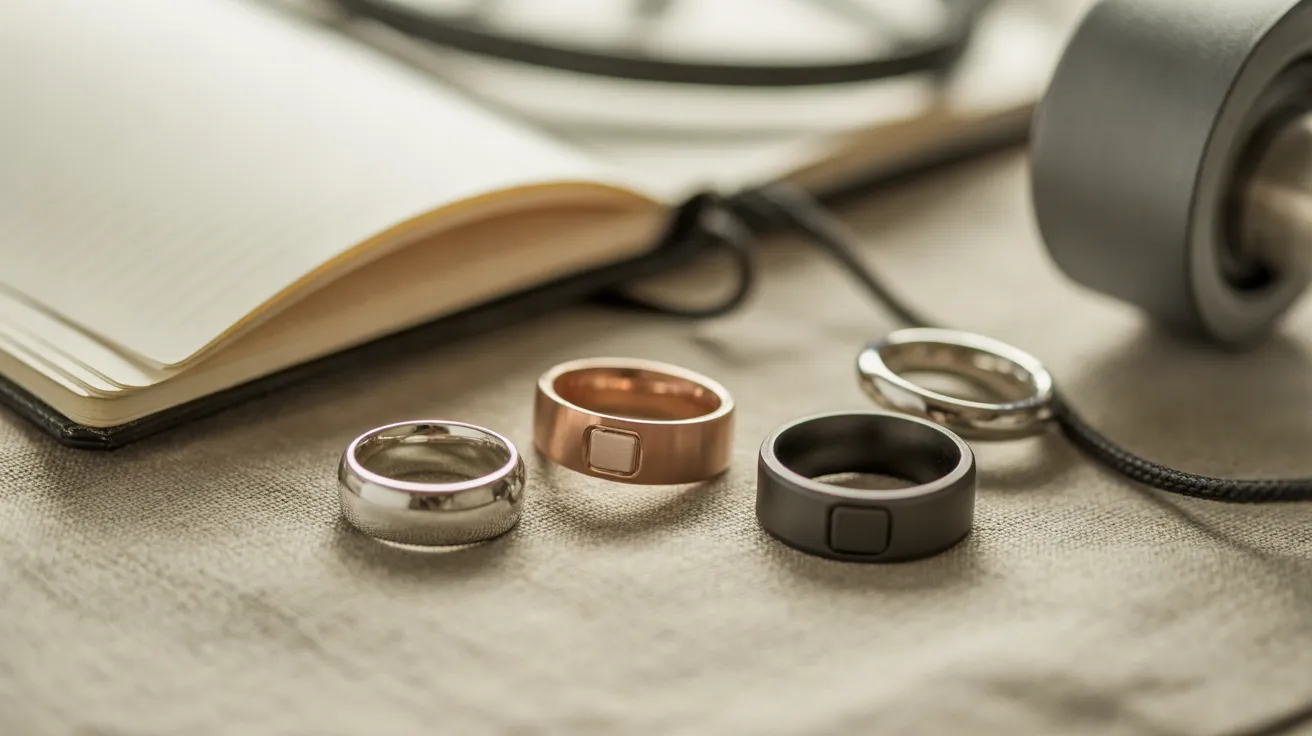
How we picked
We included smart rings currently sold by major retailers or the maker and checked listed features readers can verify: sleep tracking, heart rate or SpO2 support, battery life, water resistance, sizing method, materials, and starting price. We also noted whether core health insights require a subscription and whether the ring works with iPhone, Android, or both.
Tip: Check subscription costs and sizing options before you buy, since a lower ring price can cost more over time and fit has a big effect on comfort and data quality.
If you want the best smart ring for health tracking, 2026 is the first year that feels genuinely mature rather than experimental. Battery life is longer, sleep tracking is less erratic than it was even 18 months ago, and the better rings now capture heart rate, blood oxygen, skin temperature trends, sleep stages, step count, and stress signals in a form factor that weighs just a few grams.
That sounds great until you actually try to buy one. On paper, many rings look nearly identical: same glossy app screenshots, same promises around recovery, and the same claims about “all-day wellness.” In practice, the difference between a ring you wear for 6 months and one you abandon in a drawer usually comes down to fit accuracy, app usability, charging habits, and whether the data helps you act on your health.
Below the ranked list on this page, you already have the top picks. What follows is the part that usually matters even more: which type of smart ring for health tracking actually fits your body, your goals, and your tolerance for app quirks. I’ll also break down budget ranges, key features that matter in daily use, and the review patterns that separate reliable rings from frustrating ones.
How we evaluate recommendations on this site: We prioritize products with strong buyer feedback, consistent feature delivery, solid value in their price band, and real-world usability over flashy marketing claims. For wearable tech, that means focusing heavily on comfort, sensor consistency, battery performance, and app reliability.
Which of the 7 Best Smart Rings for Health Tracking in 2026 actually fits your goal?
The biggest mistake shoppers make is assuming every ring is for the same user. It isn’t. Among the 7 Best Smart Rings for Health Tracking in 2026, some are clearly better for sleep-focused users, while others are more useful if you care about all-day activity, workout trends, or general wellness reminders.
Here’s the simplest way to think about the rings already listed above:
- Best for sleep-first tracking: Models that emphasize sleep stages, overnight heart rate, temperature trend, and recovery scoring
- Best for workout basics: Rings that log steps, activity, calorie estimates, and continuous heart rate
- Best for all-day comfort: Lightweight designs with slimmer profiles and fewer complaints about finger pressure
- Best for beginners: Rings with simpler apps, fewer menus, and easy pairing
- Best for style-conscious buyers: Finishes like rose gold, matte black, or polished metallic tones that look closer to jewelry than gadget tech
For example, the Milavan Smart Health Ring Fitness Tracker for Men Women, Rose Gold 8 stands out more for style-forward wearers, while a pick like Aichiken Smart Ring, Health Fitness Tracker with Heart Rate Blood Oxygen Monitor, Sleep &… leans harder into broad health metrics. Meanwhile, repeated listings like Mirlray Smart Ring for Women & Men, Smart Ring Health Tracker, Blood Oxygen & Heart Rate… suggest how aggressively some sellers compete in this category, which makes feature overlap even harder to decode unless you focus on your use case first.
Smart watch vs smart ring for health tracking: which is better in real life?
The search for smart watch vs smart ring for health tracking is exploding for one reason: people are tired of charging one more screen. If you mainly want passive monitoring, a ring often wins because it disappears on your hand and collects data with less friction.
A smartwatch is still better for:
- On-wrist notifications
- GPS workouts
- Live exercise screens
- Calling, texting, and app control
- Guided workout modes
A smart ring is usually better for:
- Sleep tracking comfort
- Wearing during the night without wrist bulk
- Lower visual distraction
- More discreet health monitoring
- Better compatibility with formal wear or office settings
Here’s the definitive answer: for passive wellness data, the best smart ring for health tracking is usually more comfortable than a smartwatch; for active training features, a smartwatch still does more. If you care most about overnight recovery, resting heart rate, and whether stress patterns are improving, rings now make more sense than they did even a year ago.
That’s also why many buyers use both. The watch handles workouts; the ring handles 24/7 background data.
What should you look for in the 7 Best Smart Rings for Health Tracking in 2026?
Even among the 7 Best Smart Rings for Health Tracking in 2026, four details matter more than the marketing copy.
1. Fit accuracy matters more than sensor count
A ring that’s even half a size off can produce weaker readings, especially overnight. You want a snug fit that doesn’t rotate freely but also doesn’t leave deep compression marks after several hours.
Practical rule: if your fingers swell during sleep or after workouts, choose the finger and size that still feels stable in the morning. Many returns happen because users size for daytime comfort only.
2. Sleep data quality beats inflated metric lists
Some rings advertise 10 or more health measurements, but only 3 or 4 are genuinely useful every day. The most valuable signals for most users are:
- Resting heart rate
- Sleep duration and sleep stages
- Blood oxygen trend
- Skin temperature trend
- Stress or recovery trend
If a ring gives you those consistently, it’s already doing the core job. A messy app with too many weak metrics can be less useful than a simpler ring with cleaner sleep insights.
3. Battery life should be measured in habit, not just days
A listing might promise several days of battery, but real-world battery depends on continuous monitoring frequency, blood oxygen checks, app sync intervals, and workout tracking use. Rings with heavy SpO2 polling often drain faster than buyers expect.
Pro tip: charge your ring while showering or during a 20-minute desk session every few days. That habit prevents most “battery anxiety” complaints, especially with slimmer rings.
4. App readability is the hidden deal-breaker
The ring isn’t just hardware; it’s a sensor feeding an app. If the app buries sleep scores under five tabs or shows trend charts without context, you’ll stop checking it by week two.
The best apps answer real questions quickly:
- Did you sleep better than your 7-day average?
- Is your resting heart rate trending up?
- Did your recovery drop after late meals, alcohol, or travel?
- Are your stress readings consistently elevated?
If not, the raw data won’t change your behavior. For more context on how readers evaluate technical product comparisons across categories, you can see a full article on another niche where setup details matter as much as the product itself.
Which price range makes sense for a smart ring for health tracking?
Most buyers don’t shop by lab-grade specs. They shop by budget. And in this category, price often tracks sensor consistency, app polish, materials, and comfort, not just the number of features listed.
Entry-level range: best for testing whether you’ll actually wear one
If you’re new to rings, lower-cost options are ideal for figuring out whether you can tolerate 24/7 finger wear. The trade-off is that data smoothing, app design, and sync speed may be less refined.
Entry-level rings usually work best for:
- Step counting
- Basic sleep duration tracking
- Heart rate spot checks
- General wellness monitoring
This is where beginner-friendly picks like Women Men Smart Ring Health Tracker, Sleep Exercise Health Monitoring Wearable Device, IP… can make sense. You’re not buying elite analytics; you’re buying a low-risk way to build the habit.
Mid-range sweet spot: where most people get the best value
For most readers, this is the smartest zone. The best smart ring for health tracking for average users is usually found in the middle price band, where comfort, sensor consistency, battery life, and app quality start to feel balanced.
You’ll typically get:
- Better sleep-stage reliability
- More stable overnight heart rate readings
- Cleaner app dashboards
- Better water resistance
- Fewer complaints about flaky syncing
If you’ve already worn a fitness tracker before and want a smaller alternative, start here rather than at the bottom of the market.
Premium-leaning picks: worth it only if wearability is exceptional
Higher-priced rings only justify themselves if they deliver one of three things: noticeably better comfort, more reliable overnight data, or a much better app experience. If they don’t, you’re often paying for finish and branding rather than meaningfully better health insights.
That same rule shows up in other buying categories too, whether you’re comparing grinders on Blogspot or outdoor gear on Fitprops. Better design is only worth the premium if it actually changes your daily experience.
What review patterns separate the 7 Best Smart Rings for Health Tracking in 2026 from the disappointing ones?
Across wearable reviews, the same complaints keep repeating. That’s useful, because it tells you what to screen for before you buy.
Green flags in buyer feedback
Look for review language that mentions:
- Accurate sleep timing
- Comfort through the night
- Quick app sync
- Stable connection after updates
- Battery lasting close to the advertised range
- Useful trend insights rather than random numbers
A ring doesn’t need perfect absolute accuracy to be useful. It needs consistent trend direction so you can see whether your sleep, recovery, or stress is improving week to week.
Red flags that usually predict returns
These complaints are much more serious:
- “Data jumps around with no reason”
- “App keeps disconnecting”
- “Sizing feels inconsistent”
- “Heart rate is clearly wrong during rest”
- “Battery degrades quickly after a few weeks”
- “The finish scratches fast and looks worn”
If you see multiple reviews mentioning overnight gaps, that’s especially concerning. A smart ring for health tracking lives or dies on sleep data, and broken overnight logging ruins the main reason many people buy one.
💡 Did you know? Finger-based wearables can sometimes capture resting and overnight signals more consistently than loose wrist wearables, simply because the sensor position is less likely to shift while you sleep. That doesn’t make every ring more accurate than every watch, but it explains why sleep-focused users often prefer rings.
How do you get better results from a smart ring for health tracking after you buy it?
Buying one of the 7 Best Smart Rings for Health Tracking in 2026 is only half the job. Setup and usage habits affect your data more than most product listings admit.
Wear it on the right finger
For many users, the index or ring finger provides the best combination of comfort and signal stability. If one finger swells heavily overnight, move to another rather than forcing a tight fit and blaming the sensors.
Give the algorithm at least 7 to 10 days
The first few nights often look noisy. Trend-based features like sleep baseline, recovery pattern, and stress scoring become more useful after a week or more of consistent wear.
Keep expectations realistic for workouts
Most rings do well with daily movement and broad exercise trends, but they’re generally less ideal for high-motion training, gripping weights, boxing, rowing, or sports with repeated hand impact. That’s where the smart watch vs smart ring for health tracking question gets practical: if your main goal is training metrics, the watch still has the edge.
Use trends, not isolated readings
One bad night doesn’t matter much. Three nights of elevated resting heart rate plus shorter sleep and worse recovery? That’s actionable.
If you enjoy reading broader buyer guides in other categories, you’ll find similar pattern-based thinking here, and if you’re researching compact tech accessories, you can also learn about best flash drive for iphone. Even off-topic examples can sharpen how you compare features versus real-world use.
Is a smart ring for health tracking worth it in 2026?
Yes, for the right person. A smart ring is worth it in 2026 if you want low-friction sleep tracking, passive wellness trends, and less screen exposure than a watch.
It’s usually not worth it if you expect:
- Detailed GPS workout analytics
- Rich smartwatch notifications
- On-device exercise displays
- Perfect medical-grade readings
- Zero effort around sizing and charging
The best case for a ring is simple: you want to wake up, open the app, and quickly understand how you slept, whether your recovery is slipping, and whether your body is showing early stress signals. That’s where this category is strongest right now.
You’ll even see similar “use-case first” logic in unrelated gift and gadget guides like the best baby shower centerpieces for twins or market browsing hubs such as www.google.fm: the best product is rarely the one with the longest bullet list. It’s the one that solves the exact problem you actually have.
Final buying advice for the 7 Best Smart Rings for Health Tracking in 2026
Among the 7 Best Smart Rings for Health Tracking in 2026, the single most important factor is fit stability during sleep. If the ring doesn’t sit securely and comfortably overnight, the health data becomes less reliable, and you’ll stop wearing it long before the battery or feature list matters.
So if you’re choosing between two similar models, pick the one with the stronger reputation for comfort, overnight tracking consistency, and a readable app. In this category, that combination beats flashy extras almost every time.
Frequently Asked Questions
smart watch vs smart ring for health tracking
A smartwatch is better for workouts, GPS, notifications, and live exercise data. A smart ring is usually better for sleep comfort, passive monitoring, and discreet all-day wear, so the better choice depends on whether you want training features or low-effort health tracking.
what is the best smart ring for health tracking
The best smart ring for health tracking is the one that fits securely, tracks sleep consistently, and has an app you’ll actually use every morning. For most buyers, comfort and overnight data quality matter more than having the longest feature list.
is a smart ring for health tracking worth it
Yes, if your goal is passive wellness tracking, sleep insights, and recovery trends without wearing a bulky watch. It’s less worth it if you mainly want detailed workout metrics, on-screen coaching, or smartwatch-style notifications.
how to choose the right size for a smart ring for health tracking
Choose a size that feels snug but not tight, especially at night when fingers can swell. If the ring spins freely or shifts position while you sleep, your readings may become less consistent.
can smart rings measure blood oxygen and sleep accurately
They can measure trends in blood oxygen and sleep reasonably well for consumer wellness use, especially during overnight wear. They are not medical devices, so treat the data as directional insight rather than a clinical diagnosis.
No comments yet