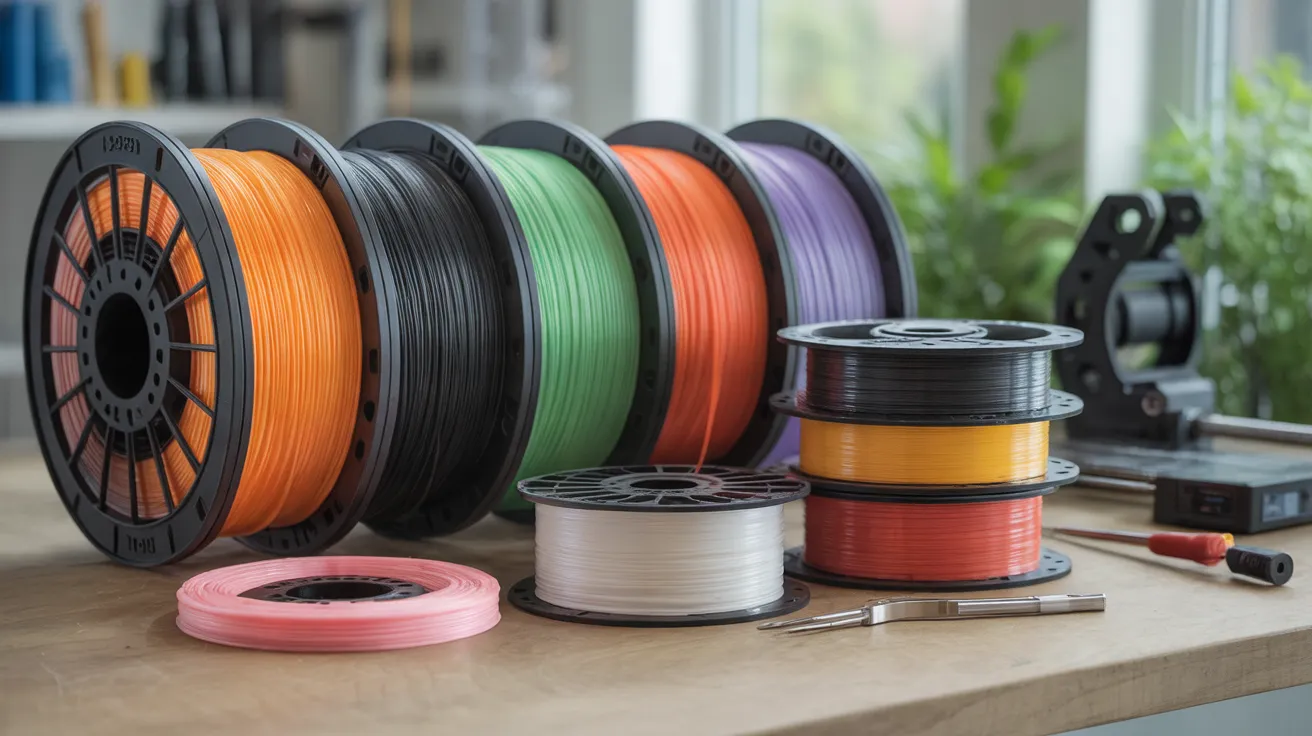
How we picked
We considered PETG filaments that are widely sold online or in retail and checked specs readers can verify on product pages: diameter tolerance, net weight, spool size, recommended nozzle and bed temperatures, color options, and price per kilogram. We also favored products with clear material details and broad compatibility with standard 1.75 mm FDM printers.
Tip: If two PETG filaments are close, choose the one with tighter diameter tolerance and a sealed package, especially if your printer is sensitive to flow changes.
If you’re comparing petg printer filament options, the 7 Best PETG Printer Filaments in 2026 only matter if they actually print cleanly on your machine. PETG has a reputation for being “easy once tuned,” but one bad spool can turn a 6-hour bracket print into a stringy mess with elephant’s foot, blobs, and weak layer lines.
That’s why smart buyers don’t just look at color or price per kilogram. They compare diameter consistency, moisture resistance, print speed tolerance, and how forgiving the spool is at 235°C to 255°C. Get those right, and PETG becomes one of the most useful materials you can keep next to PLA.
Below, you’ll get the practical part most roundup posts skip: which type of PETG is best for functional parts, where budget spools are fine, what settings matter most, and how to avoid the review-pattern problems that show up again and again with petg 3d printer filament 1.75mm.
Quick trust note: The ranked product list already appears above on this page, so this guide focuses on how to choose among those seven picks and get better results from them rather than repeating the ranking.
Why the 7 Best PETG Printer Filaments in 2026 beat random budget spools
The biggest difference between the 7 Best PETG Printer Filaments in 2026 and no-name bargain rolls usually comes down to consistency under real print conditions. A spool that stays close to 1.75mm nominal diameter with low ovality will feed more predictably, especially during long walls, top layers, and retractions.
PETG is less forgiving than PLA when the filament quality drifts. A cheap spool might still print a simple hook, but on a functional enclosure or bracket you’ll notice more stringing, uneven gloss, and weaker bridges within the first 100 grams.
If you’ve ever searched what is petg 3d printer filament, the simple answer is this: PETG is a glycol-modified polyester designed for better impact resistance and heat tolerance than PLA, while still printing more easily than many engineering plastics. That’s exactly why it’s popular for organizers, machine guards, clips, tool holders, and light outdoor parts.
Which petg printer filament is best for beginners, fast printers, and functional parts?
Not every spool in the ranked list serves the same buyer.
Here’s the clearest way to think about the seven picks already listed above:
- Best for beginners: standard-speed PETG spools with a reputation for low warping and stable extrusion at moderate speeds around 40-80 mm/s
- Best for value: multi-pack PETG bundles if you print often and want a lower effective 3d printer filament petg price per spool
- Best for fast machines: rapid formulations and high speed matte petg 3d printer filament 1kg style materials built for higher volumetric flow
- Best for functional strength: classic glossy PETG with strong interlayer bonding rather than “pretty first, strength second” blends
- Best for color testing and small projects: short-run multi-color bundles, especially if you don’t want to commit to 1kg of every shade
If you own a newer CoreXY or other high-flow machine, the premium you pay for speed-tuned PETG is often justified. If your printer tops out around 60 mm/s with a standard hotend, regular PETG usually delivers better value.
What to look for before you buy petg 3d printer filament 1.75mm
You don’t need a chemistry degree to buy good petg 3d printer filament 1.75mm. You need five concrete checks.
1. Diameter tolerance matters more than flashy packaging
For 3d printer petg filament, a stated tolerance around ±0.02 mm to ±0.05 mm is the number worth caring about. Tighter control usually means steadier extrusion and fewer random under-extruded lines on long prints.
A lot of user complaints that sound like “my printer suddenly started clicking” are actually filament consistency problems, not hardware failure.
2. Dry packaging is non-negotiable
PETG absorbs moisture faster than many beginners expect. If the spool arrives with weak vacuum sealing or no desiccant, you may hear popping at the nozzle within hours in a humid room.
That matters because wet PETG produces:
- more stringing
- rougher surface finish
- weaker layer adhesion
- inconsistent extrusion width
Pro tip: Drying PETG at roughly 60°C to 65°C for 4 to 6 hours can rescue a spool that seems “bad” out of the box. In my experience, that fixes more PETG problems than changing slicer profiles.
3. Check whether it’s tuned for speed or strength
A standard petg filament 3d printer spool behaves differently from fast-print variants. Rapid PETG can keep up better on high-speed printers, but some standard PETG blends still give the strongest layer bonding for brackets, clamps, and load-bearing parts.
That’s why the best choice depends on use case:
- Display parts: matte or fast-print PETG is often enough
- Functional parts: prioritize toughness and layer fusion
- Large prints: choose PETG known for low stringing and stable winding
4. Spool winding quality saves failed prints
Poorly wound filament is an underrated problem. A tangle at hour 7 ruins the same print whether the material cost you budget money or premium money.
Review patterns are pretty clear here: spools with repeated comments about crossovers or tight snags are riskier for long unattended jobs than spools with minor cosmetic complaints.
5. Match PETG to your printer’s hotend and cooling setup
Most filament 3d printer petg prints well around 235°C to 250°C nozzle and 70°C to 85°C bed, but your exact machine matters. Direct-drive setups usually tolerate softer retraction values, while Bowden systems often need more tuning to keep PETG from stringing.
If you’re also improving maintenance habits, general printer care resources like Ubuntuask can be a useful reminder that reliability often starts with consistent upkeep, not just better material.
Best PETG use cases by budget: where cheap spools work and where they don’t
PETG buyers usually shop by budget bands, even if they don’t say it out loud.
Budget range: good enough for organizers, bins, and prototypes
If your target is roughly the low-end consumer price bracket, PETG can be a smart upgrade from PLA for prints that need a bit more flex and heat resistance. This is where basic black, white, and clear-ish utility colors make the most sense.
Budget PETG is usually fine for:
- drawer organizers
- cable clips
- prototype enclosures
- low-stress brackets
- shop accessories
This is also where people compare 3d printer filament petg vs pla most often. PLA still wins for absolute ease of printing, but PETG usually wins once the part might sit in a warm car, near a window, or under repeated snap-fit stress.
Mid-range: the sweet spot for most home makers
This is where many of the 7 Best PETG Printer Filaments in 2026 really earn their keep. In the mid-range, you often get better winding, better drying, and more reliable color consistency without paying a huge premium.
For most hobbyists, this bracket is the best value for:
- tool holders
- camera mounts
- electronics housings
- plant hardware
- light-duty outdoor prints
If you’ve looked up overture petg 3d printer filament or overture petg filament 1.75mm 3d printer filament, you’ve probably noticed how often shoppers use those searches as a benchmark for value. Even if you buy one of the listed picks above instead, that tells you buyers want dependable, mainstream PETG performance rather than gimmicks.
Premium range: worth it for speed, throughput, and production batches
Premium PETG only makes sense if it solves a real problem. The two biggest reasons to spend more are higher print speeds and fewer failures across lots of repeated parts.
That extra cost is easiest to justify if you:
- run a high-speed printer
- print the same part in batches
- need clean walls with less tuning
- care about predictable finish across multiple spools
If you’re building a broader printer workflow, you may also end up reading adjacent gear guides like Writeas, because PETG’s stringing and residue are much easier to manage with a clean nozzle.
What the reviews say about petg printer filament problems in 2026
The recurring complaints with petg printer filament are surprisingly consistent across retailers and user forums. The issue is rarely “PETG is bad.” It’s usually one of four setup or storage failures.
1. “It strings everywhere”
This is the number one PETG complaint, and it’s often caused by too much nozzle temperature, overly aggressive retraction, or wet filament. Dropping nozzle temp by 5°C to 10°C and drying the spool usually helps more than endless retraction changes.
2. “It won’t stick, then it sticks too well”
Classic PETG behavior. On textured PEI or bare glass, first-layer tuning can swing from weak adhesion to parts bonding so hard they damage the surface.
A safe approach is:
- slightly higher Z-offset than PLA
- moderate first-layer squish
- release agent where recommended by the bed manufacturer
3. “The layers look strong, but the print is brittle”
That usually points to under-extrusion, partial moisture contamination, or printing too cold. PETG should feel tougher and slightly more flexible than PLA in many part designs, not more fragile.
4. “The spool was fine for half the print, then feeding got weird”
That’s often a winding issue, drag on the spool holder, or dust buildup in the filament path. If you print frequently, keeping the path clean matters almost as much as the filament brand itself. Even general printer-resource rabbit holes like https://freelanceshack.com show how often users underestimate setup friction in “simple” printer tasks.
PETG settings that improve print quality faster than switching brands
Before you abandon a spool, change the settings that move the needle most.
Start with these PETG baseline settings
For standard 3d printer filament petg:
- Nozzle: 235°C to 245°C
- Bed: 75°C to 85°C
- Print speed: 40 to 70 mm/s
- Fan: 20% to 50% after the first layers
- Retraction: lower than PLA in many cases
- First layer: slightly less squish than PLA
For faster formulations such as high speed matte petg 3d printer filament 1kg, follow the maker’s speed guidance but still test with a small temperature tower before committing to a 5-hour print.
Drying is often the real fix
If a spool suddenly gets fuzzy walls and wispy travel strands, don’t assume the material is junk. PETG that sat exposed for 3 to 7 days in humid conditions can behave very differently than the same spool fresh from a sealed bag.
Clean nozzle, cleaner PETG
A dirty nozzle exaggerates PETG problems because residue catches ooze during travel moves. If your machine leaves little zits at seam starts, maintenance matters.
For older print hardware, or if you’re cycling out other devices in your workspace, practical references like secure laser printer disposal 2025 explained are a reminder that the whole print area tends to work better when you keep tools, consumables, and outdated gear under control.
PETG vs PLA: which one should you actually use?
Searches for 3d printer filament petg vs pla and 3d printer filament pla vs petg stay popular because the answer depends on the part, not the hype.
Use PLA if you want:
- easiest print success
- sharper details with less tuning
- cleaner overhangs on basic machines
- decorative indoor models
Use PETG if you want:
- better impact resistance
- better heat tolerance
- more weather resistance
- stronger utility parts with slight flex instead of brittle snap
A simple rule works for most buyers: if the part will be handled, clipped, mounted, flexed, or exposed to warmth, PETG is usually the better bet.
Is recycled PETG 3D printer filament worth trying?
Recycled petg 3d printer filament can be a solid buy if the seller is transparent about tolerance control and drying. The best recycled spools perform close to virgin material for organizers, prototypes, and many shop parts, but quality swings more if process control is loose.
I’d use recycled PETG first on:
- bins
- spacers
- test-fit parts
- low-risk functional prints
I’d be more cautious using it for precision assemblies where dimensional repeatability within a few tenths of a millimeter really matters.
The single smartest way to choose among the 7 Best PETG Printer Filaments in 2026
Among the 7 Best PETG Printer Filaments in 2026, the right pick is the one that matches your printer speed, your part strength needs, and your tolerance for tuning. If you print mostly practical parts, choose the spool with the strongest track record for low stringing, dry packaging, and consistent 1.75mm feed behavior over flashy claims.
That one criterion beats color count, bundle size, and marketing every time.
Frequently Asked Questions
what is petg 3d printer filament
PETG is a glycol-modified polyester filament used in FDM printing for parts that need more toughness and heat resistance than PLA. It’s popular because it balances strength, moderate flexibility, and easier printing than many engineering-grade materials.
3d printer filament petg vs pla
PETG is usually better for functional parts, warm environments, and impact resistance, while PLA is easier to print and often gives cleaner surface detail. If you need a simple decorative print, PLA is often enough; if you need durability, PETG is the stronger choice.
3d printer filament pla vs petg
PLA prints with less tuning and lower temperatures, but PETG holds up better under stress, sunlight-adjacent warmth, and repeated handling. For brackets, clips, and enclosures, PETG is generally the better long-term material.
is high speed PETG worth it for a regular home printer
Usually not, unless your printer can actually push higher flow rates and maintain stable cooling. On a standard machine printing around 50-70 mm/s, regular PETG often gives equal or better value with fewer tuning compromises.
how to stop PETG stringing on a 3D printer
Start by drying the filament, then lower nozzle temperature in 5°C steps and reduce excessive retraction. In most cases, stringing improves fastest when you fix moisture and temperature before changing advanced slicer settings.


No comments yet